Fawe Park Road is a street of large Edwardian houses in Putney, SW15. This one runs to three storeys with a small cellar underneath. The cellar was earning its keep — boiler, consumer unit, washing machine, dryer — but it was damp, and you could smell it before you reached the bottom of the stairs.
That smell is usually what prompts the phone call. It is also the part that paint will never fix.
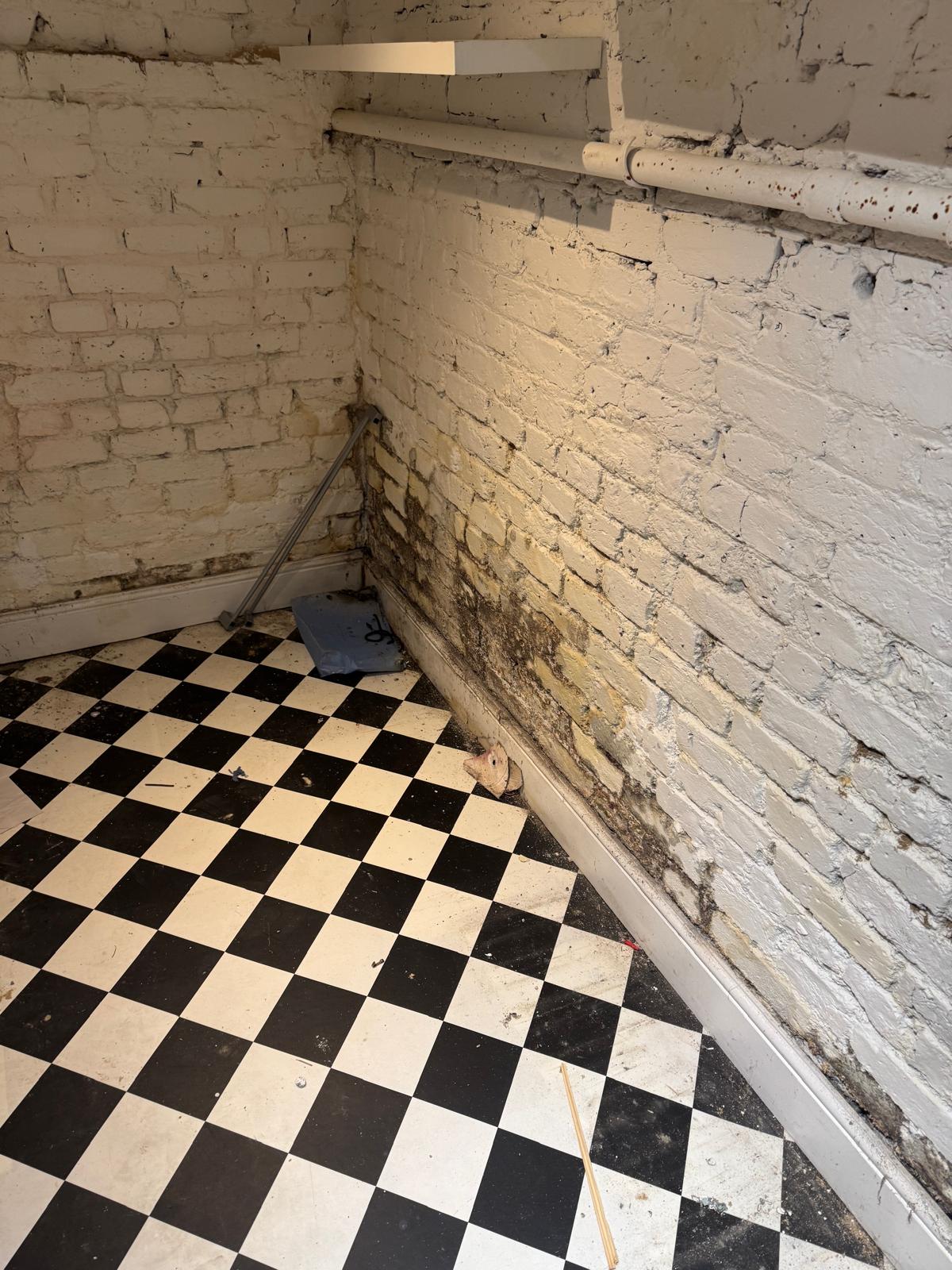
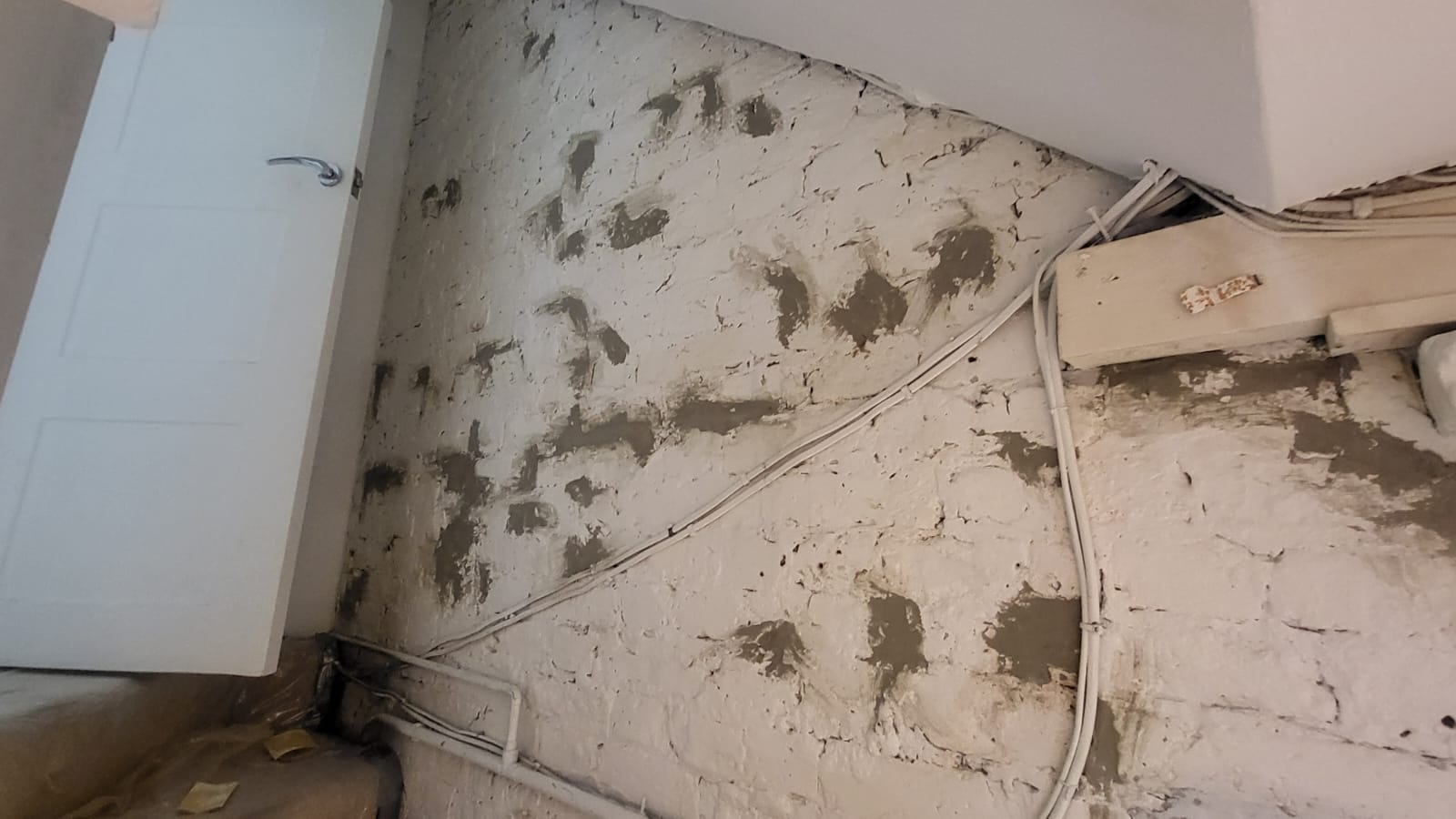
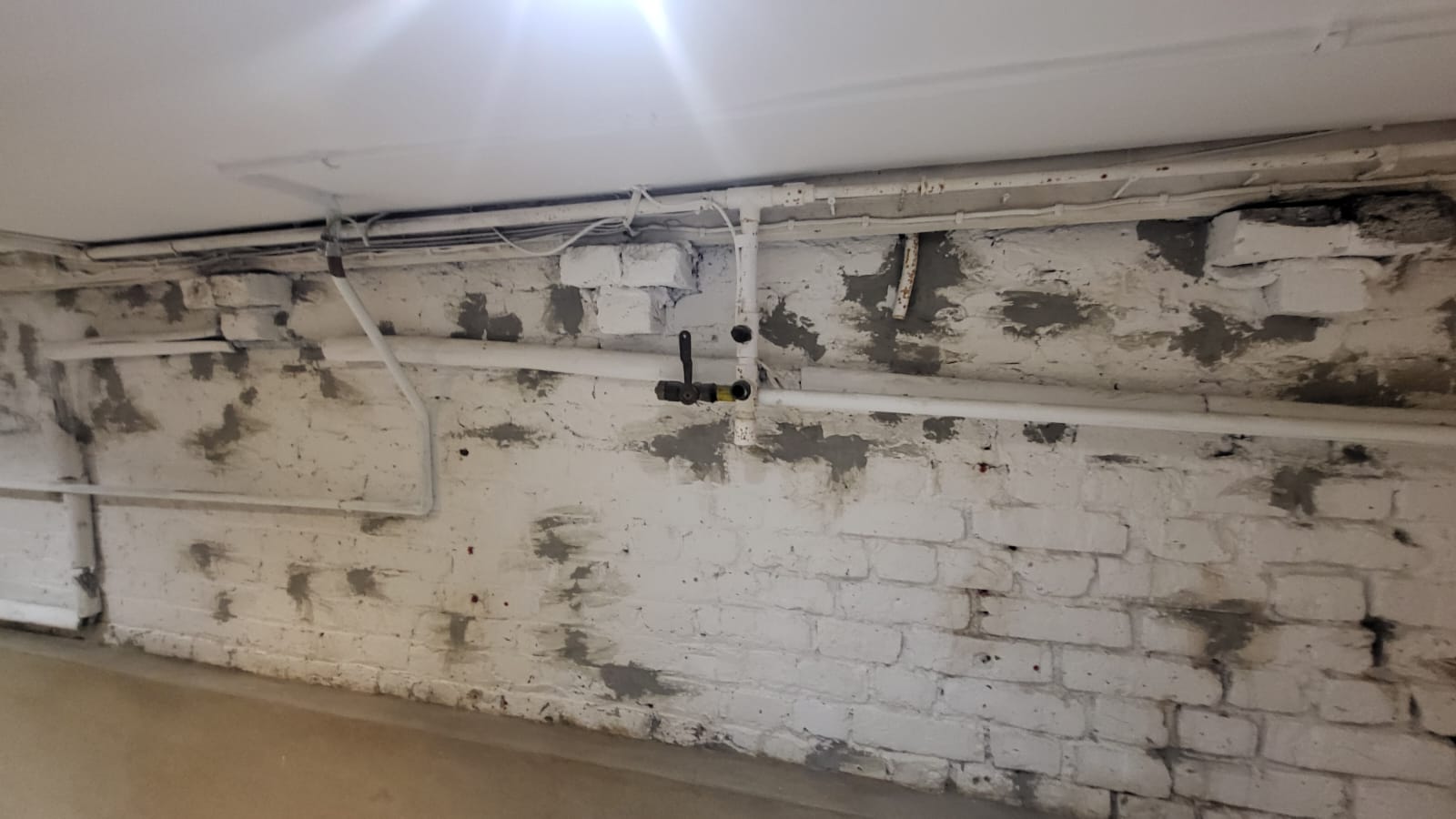
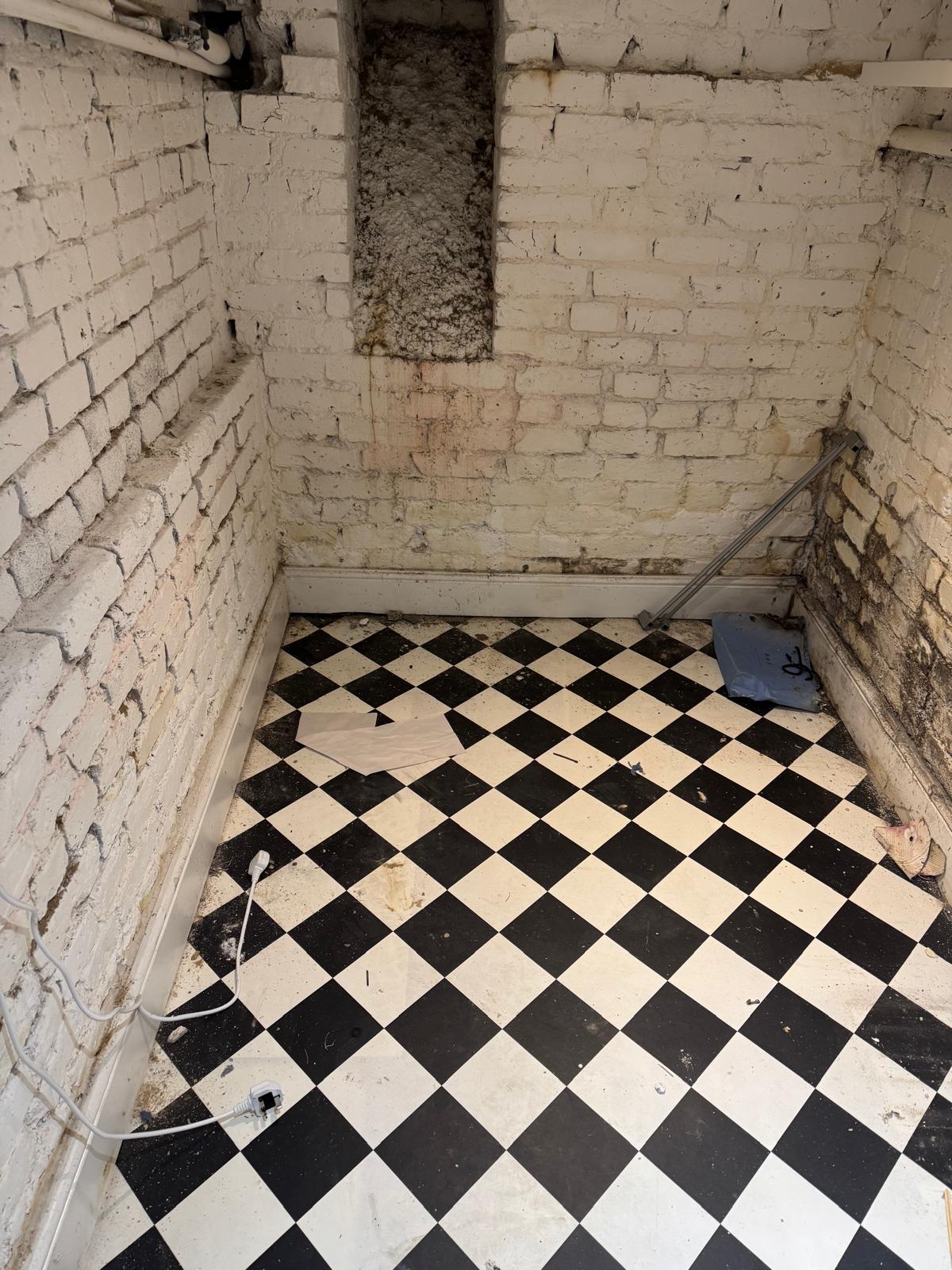
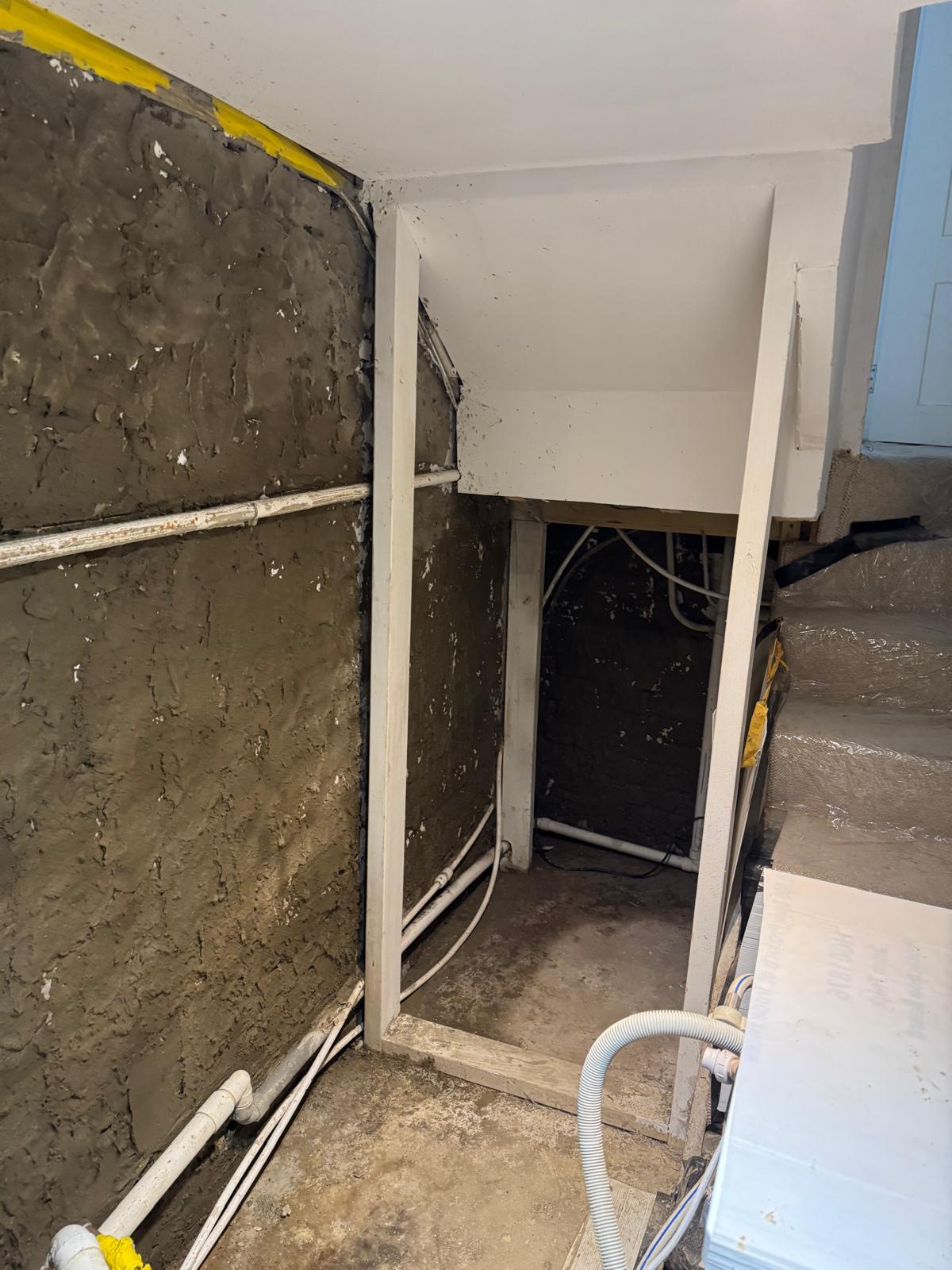
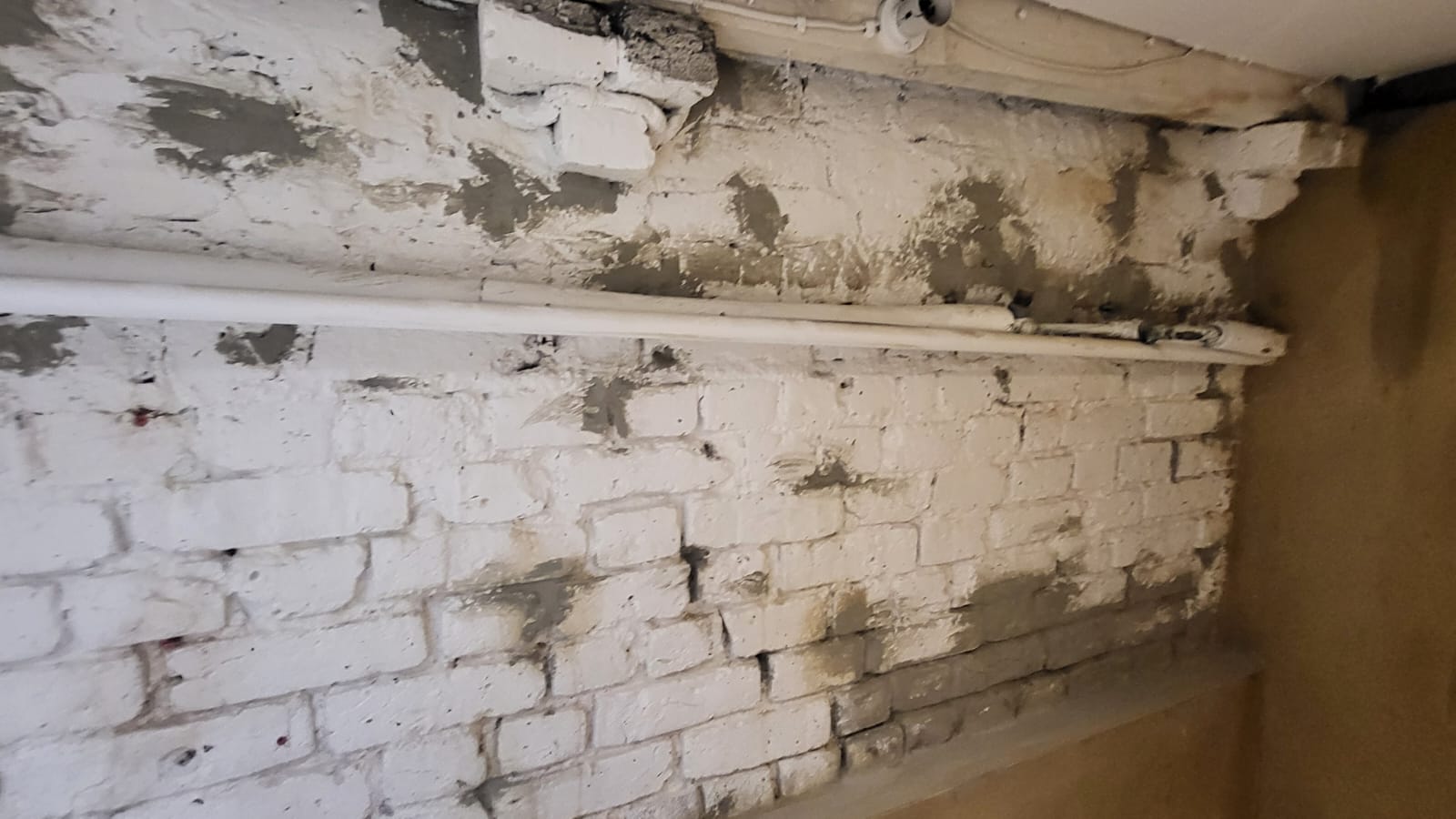
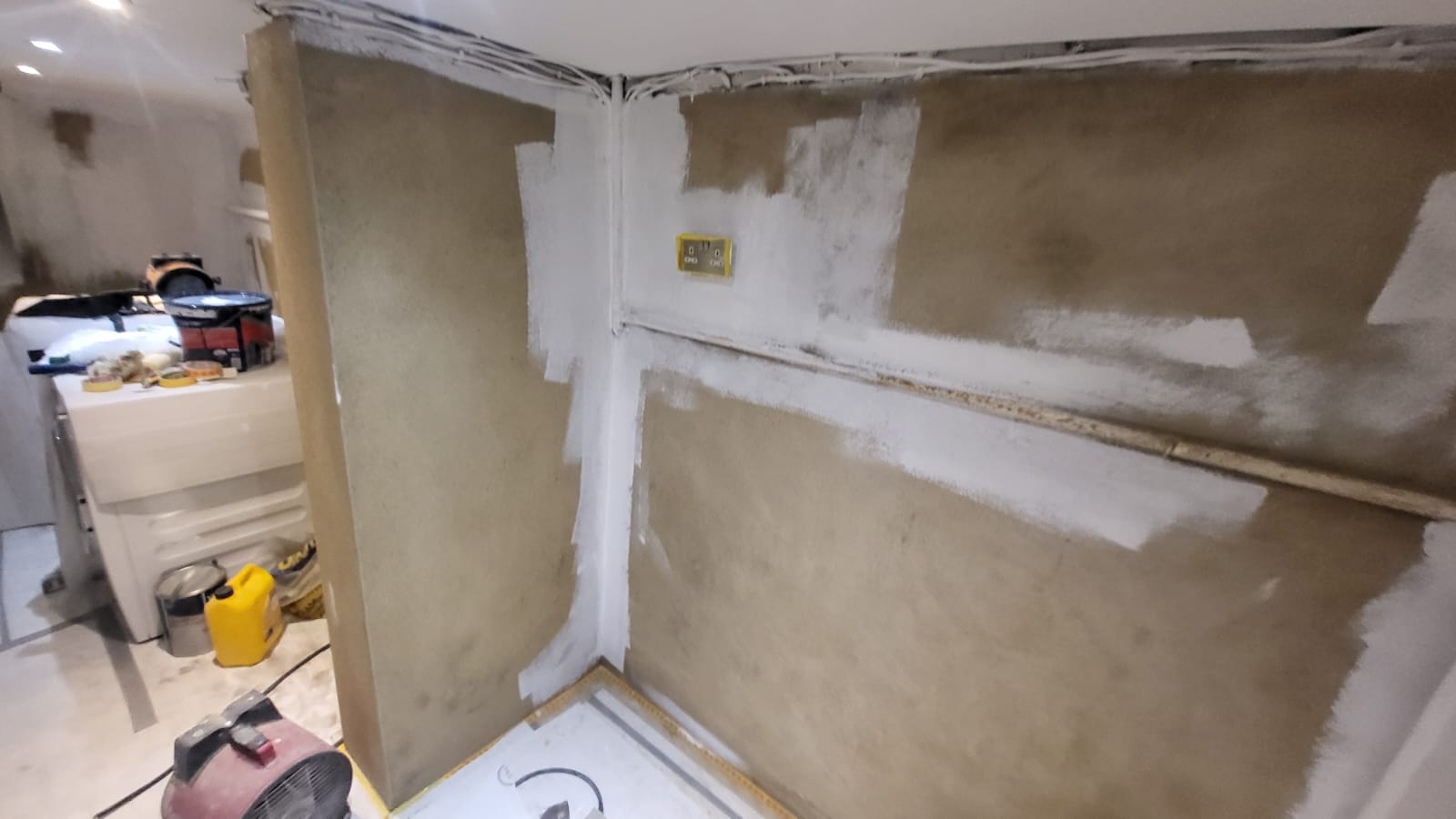
Solid brick walls, painted white at some point decades ago. Along the base of every wall ran a dark tide mark about half a metre high, with black mould pushing through the paint. In places the paint had blown off and taken the face of the brick with it.
Houses of this age were built with a damp proof course, usually slate or bitumen. After a century it is often bridged, cracked, or simply no longer there. Ground moisture then travels up through the brickwork until it can evaporate, carrying ground salts with it. Those salts stay behind in the wall face and pull moisture out of the air on their own. That is why a wall can still read damp long after the original source has been stopped, and why treating the cause without dealing with the wall face gets you nowhere.
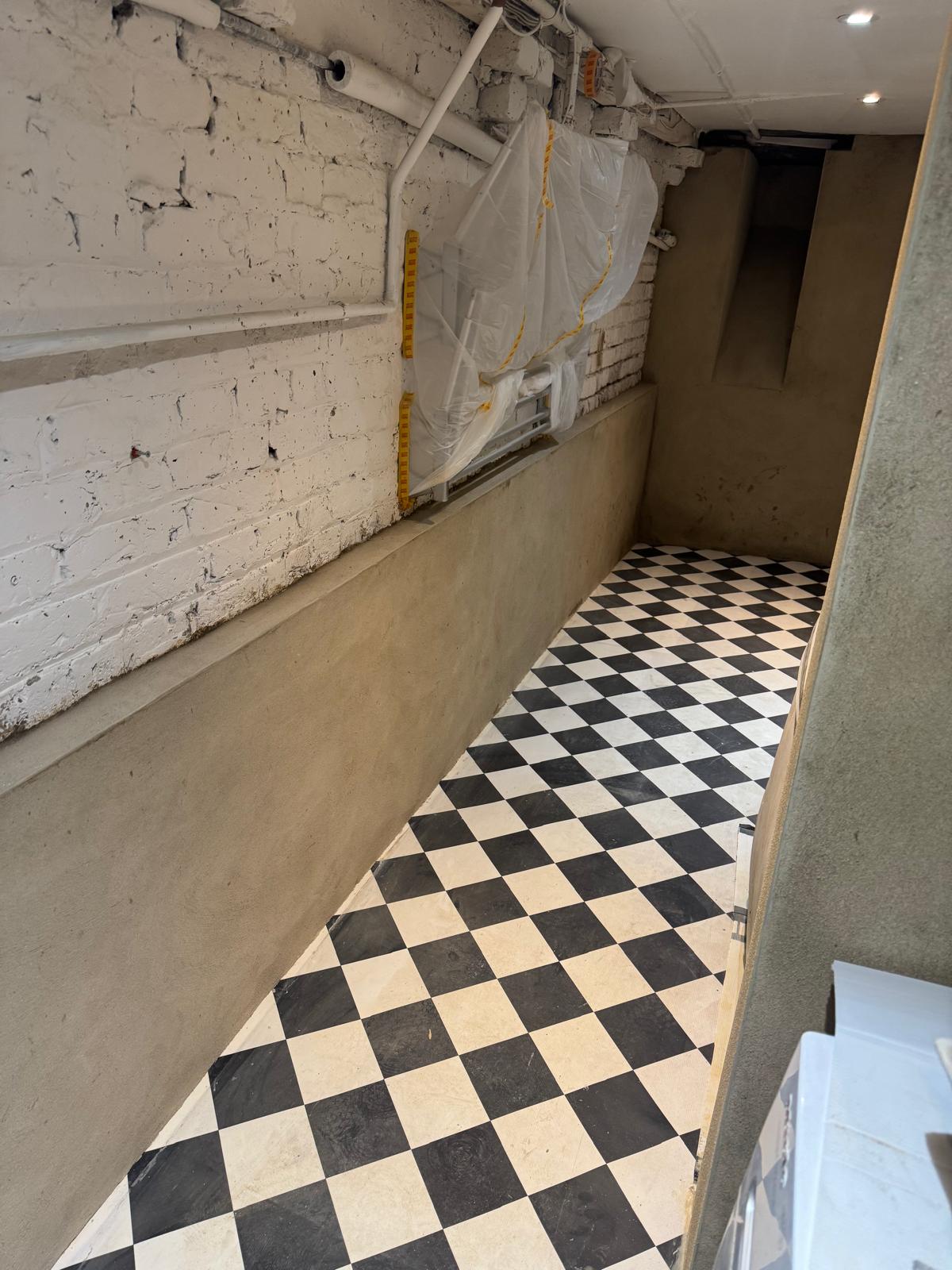
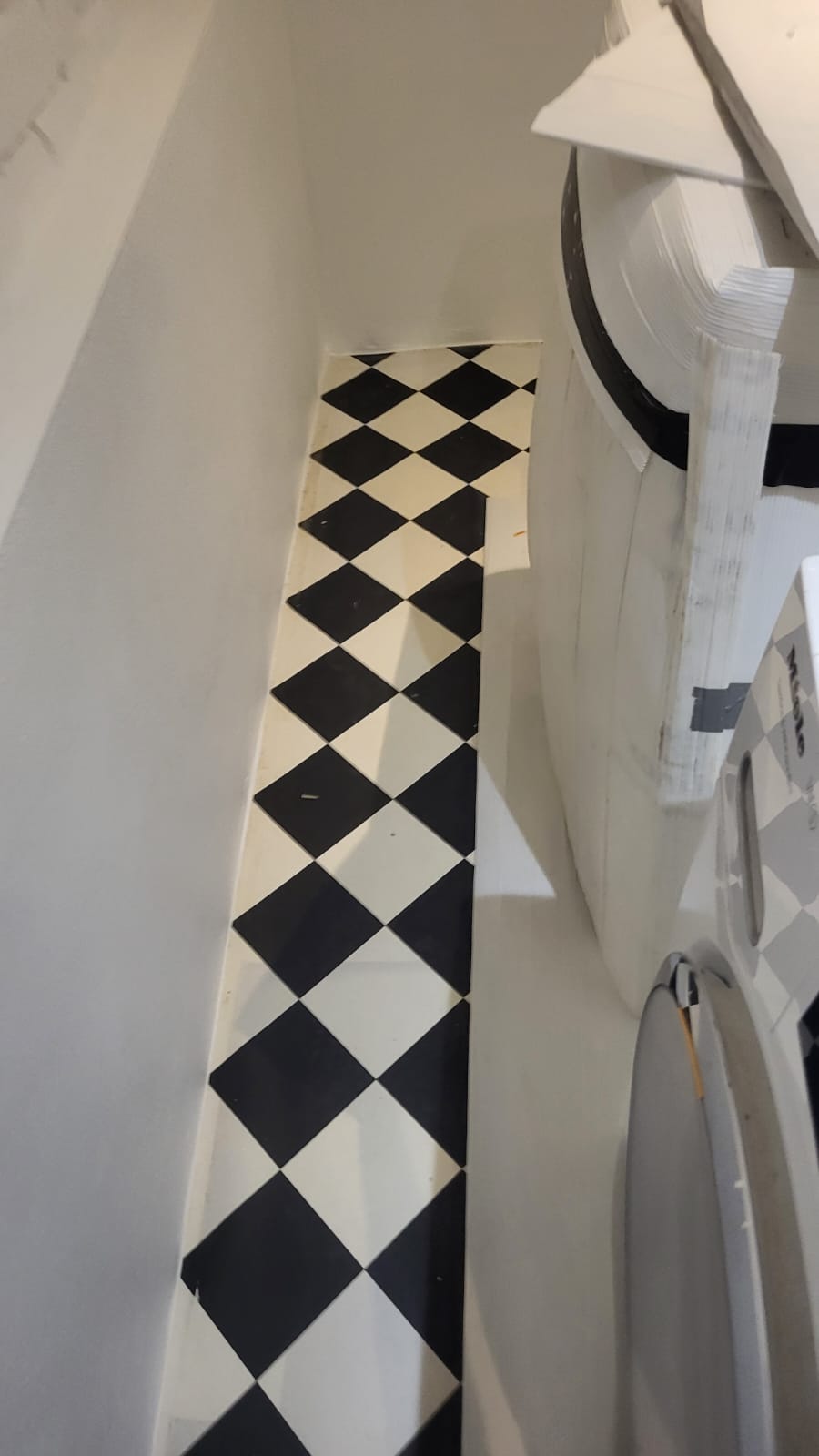
The floor was the original black and white chequerboard. Filthy, but flat and sound. Worth keeping.
The utility room came out first. Washing machine, dryer and the units around them were disconnected and taken out, so we had a clean run at the full length of every wall.
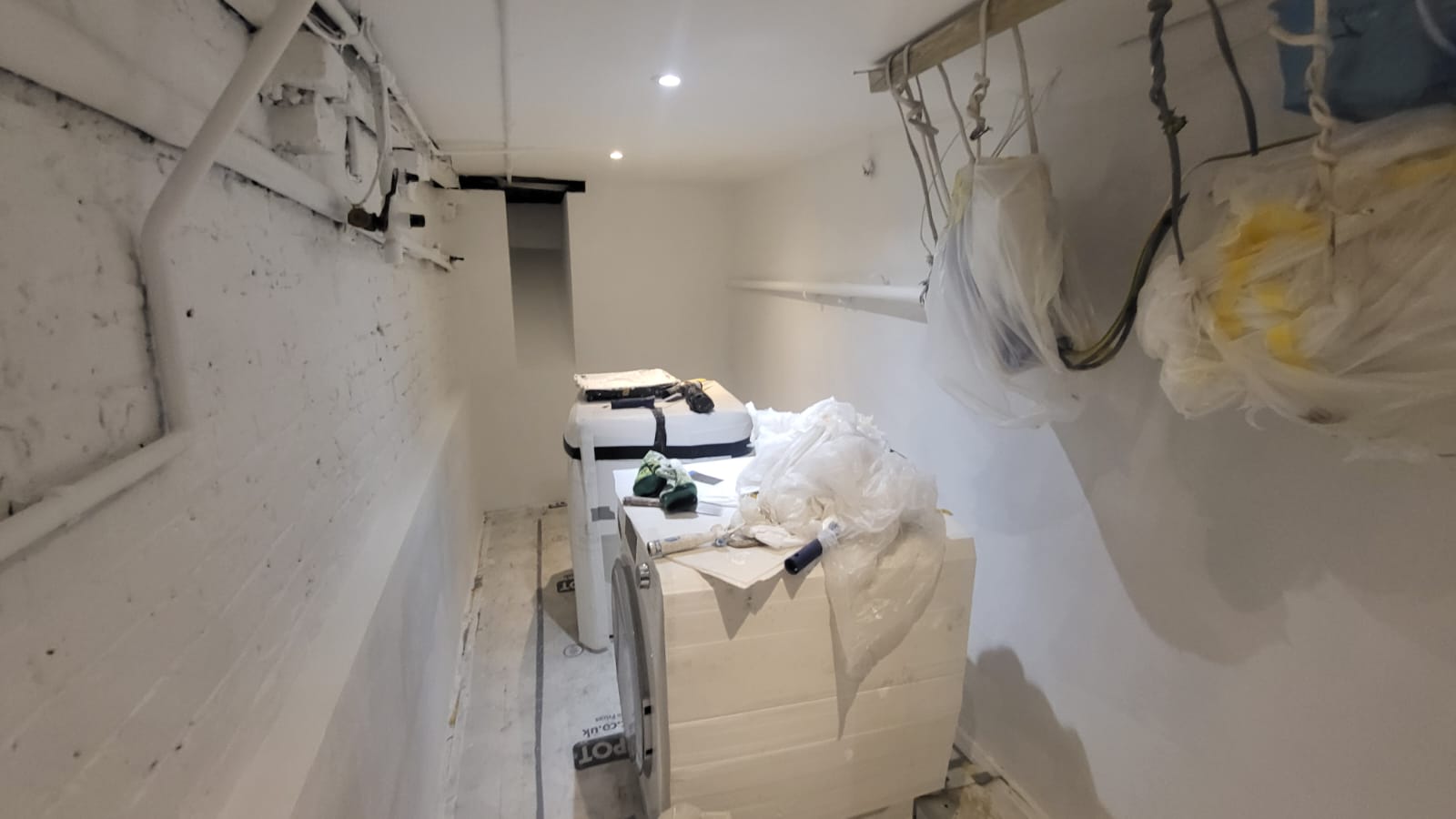
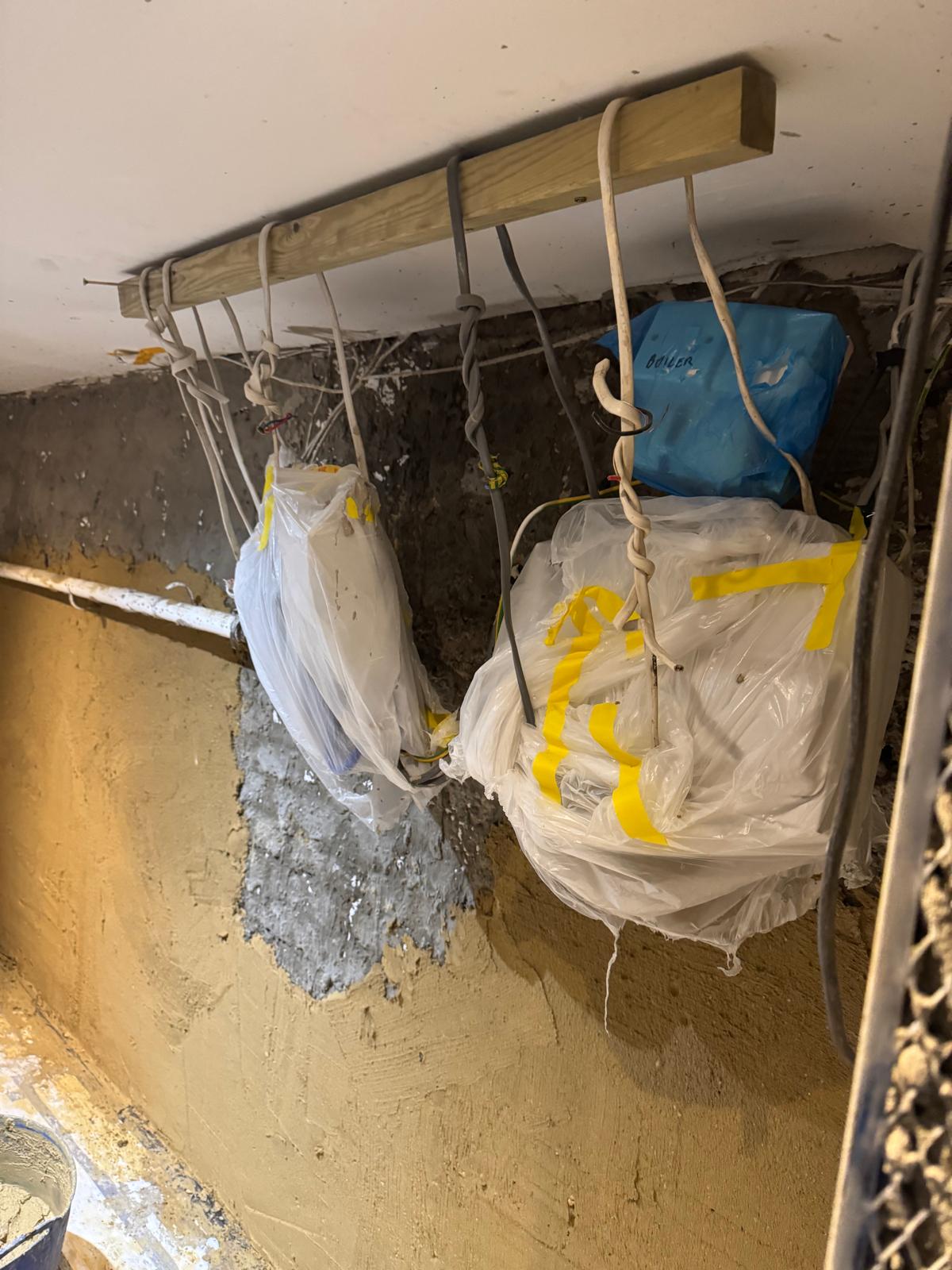
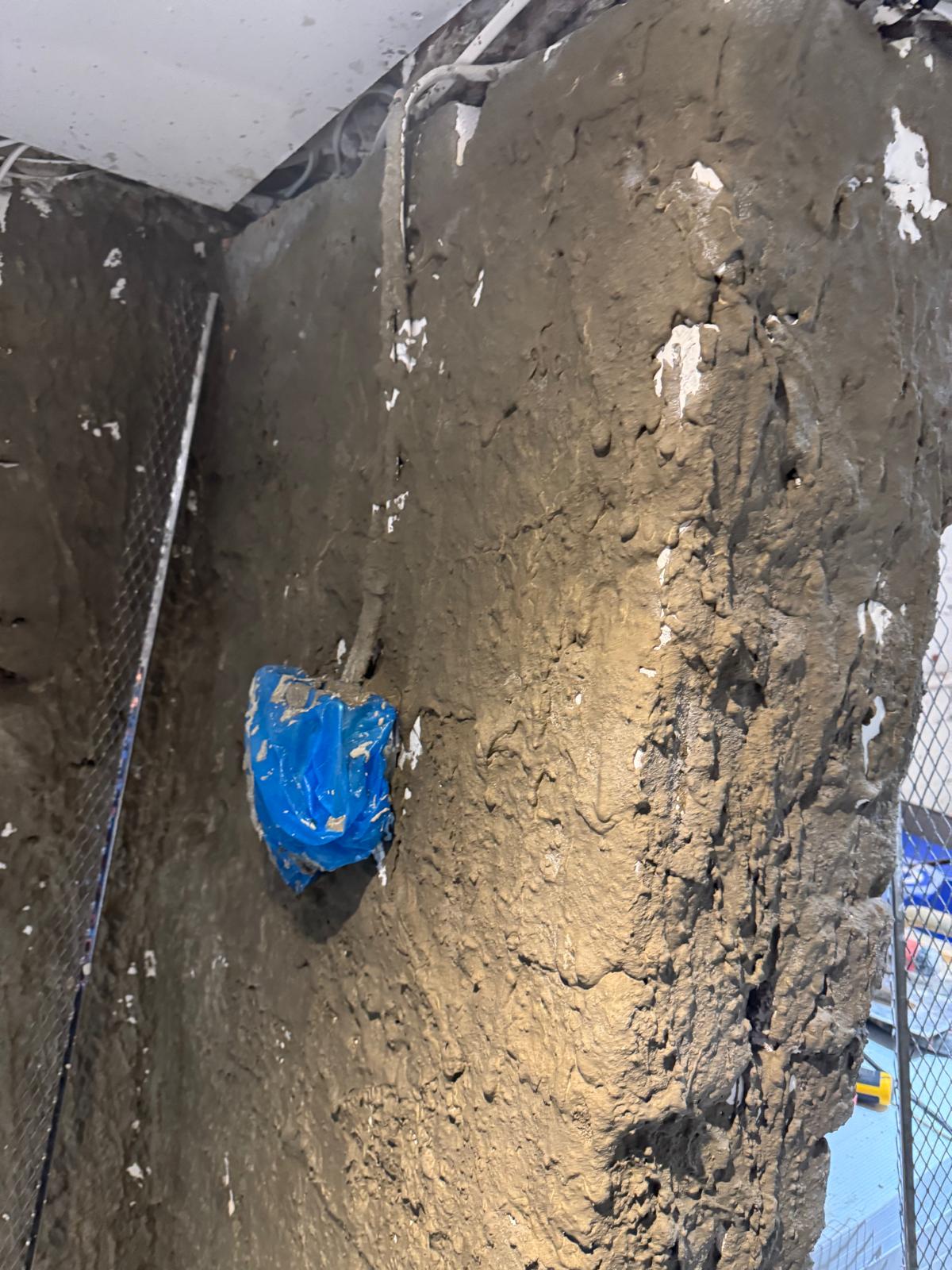
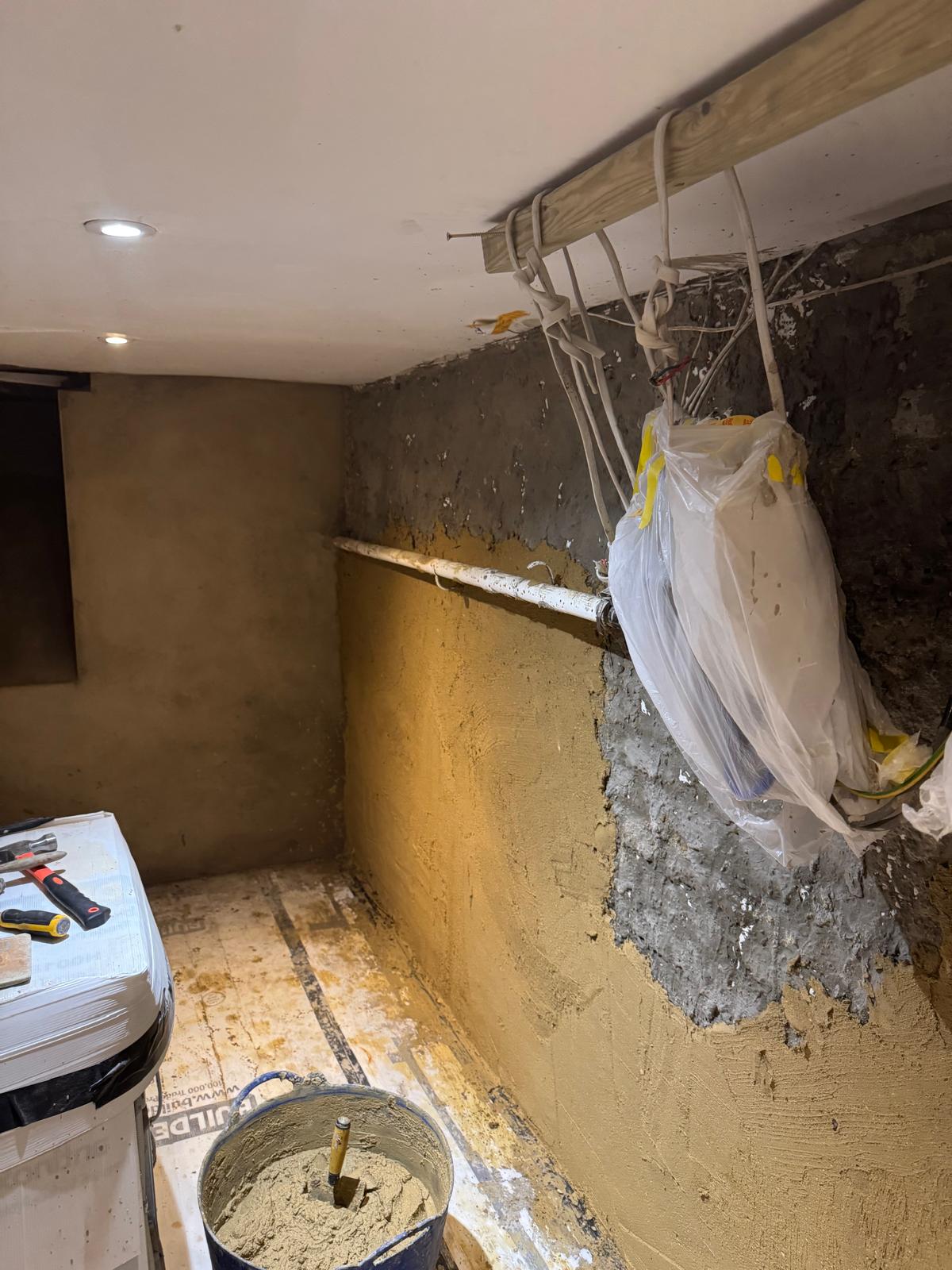
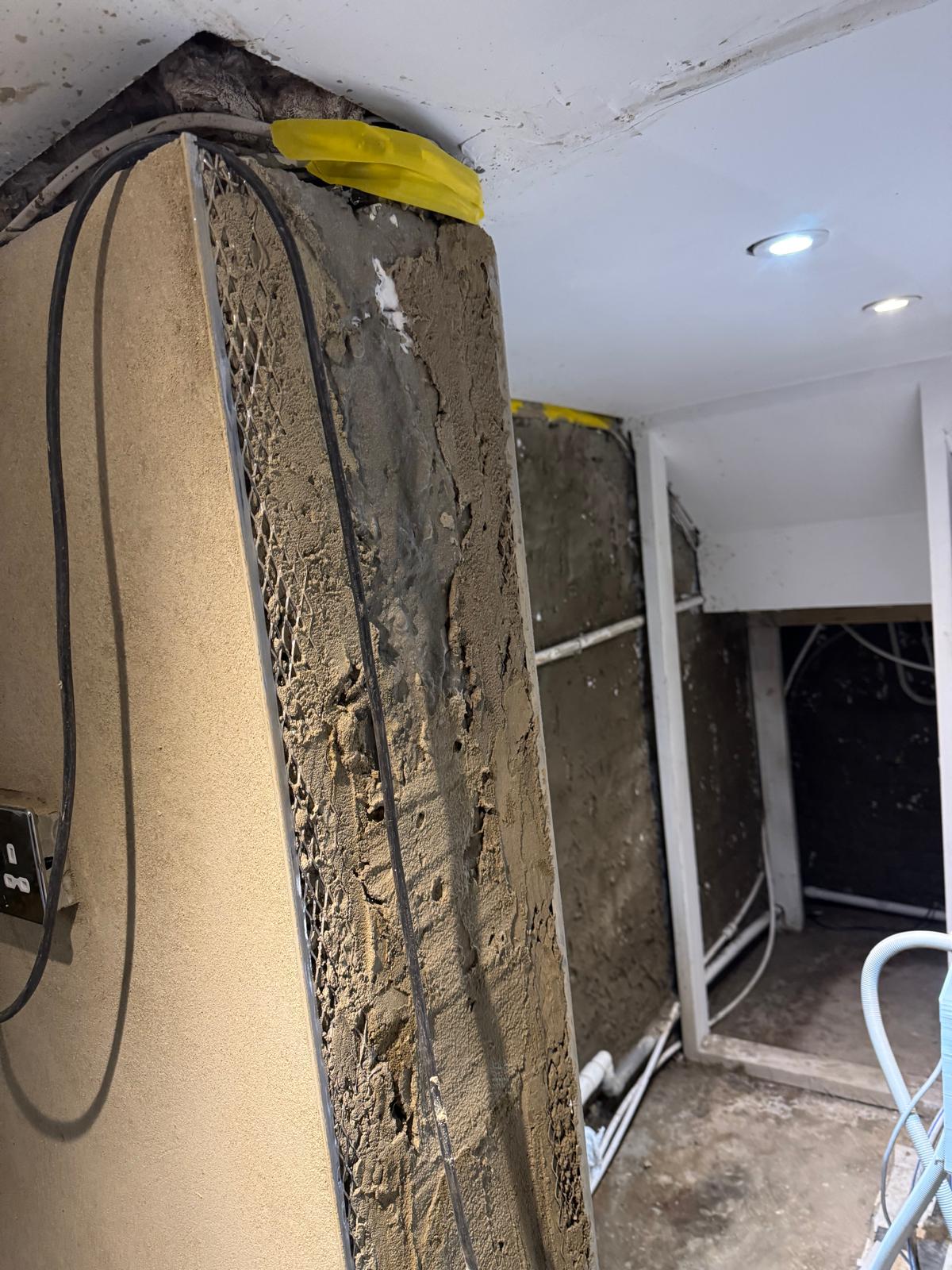
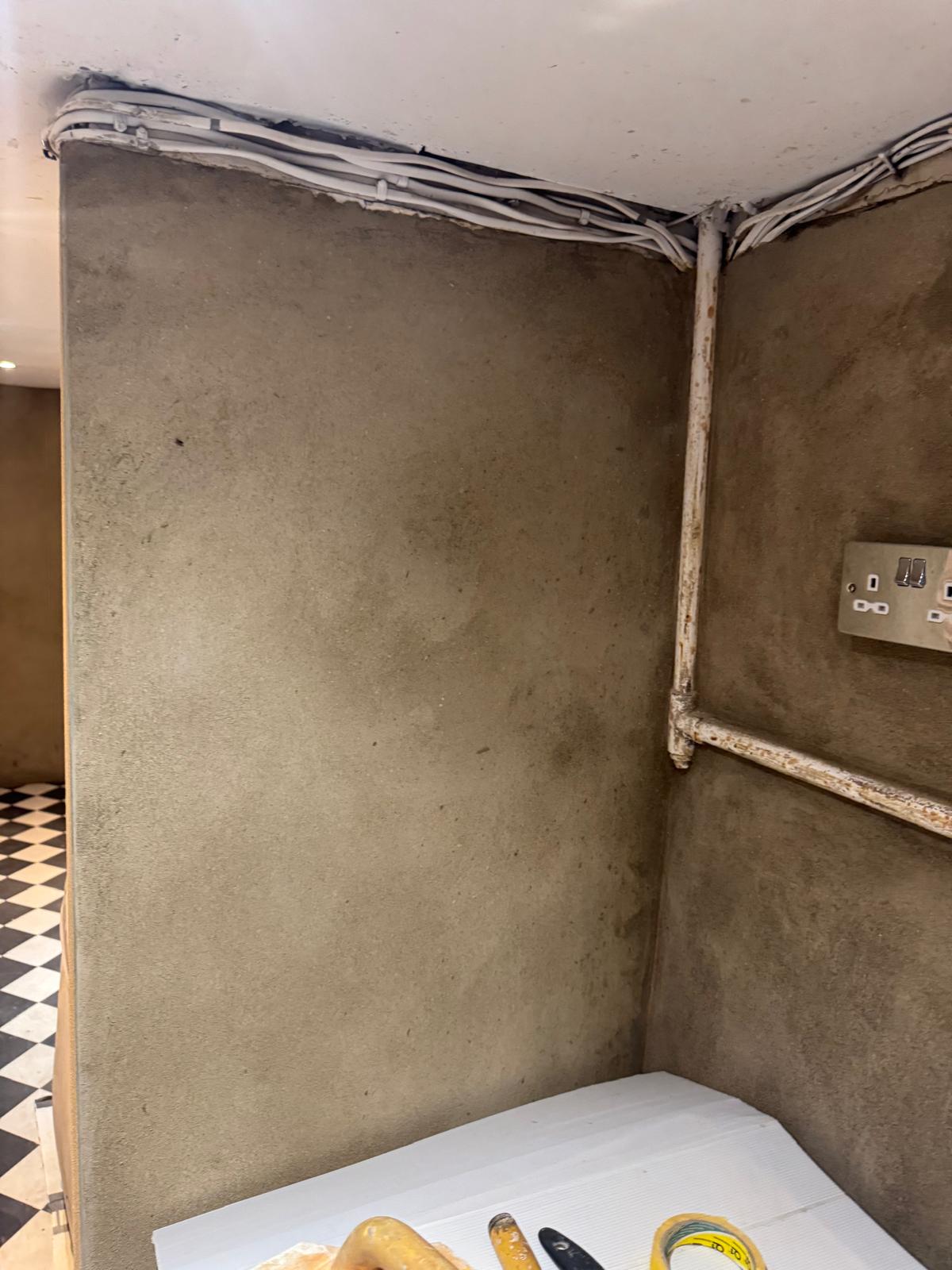
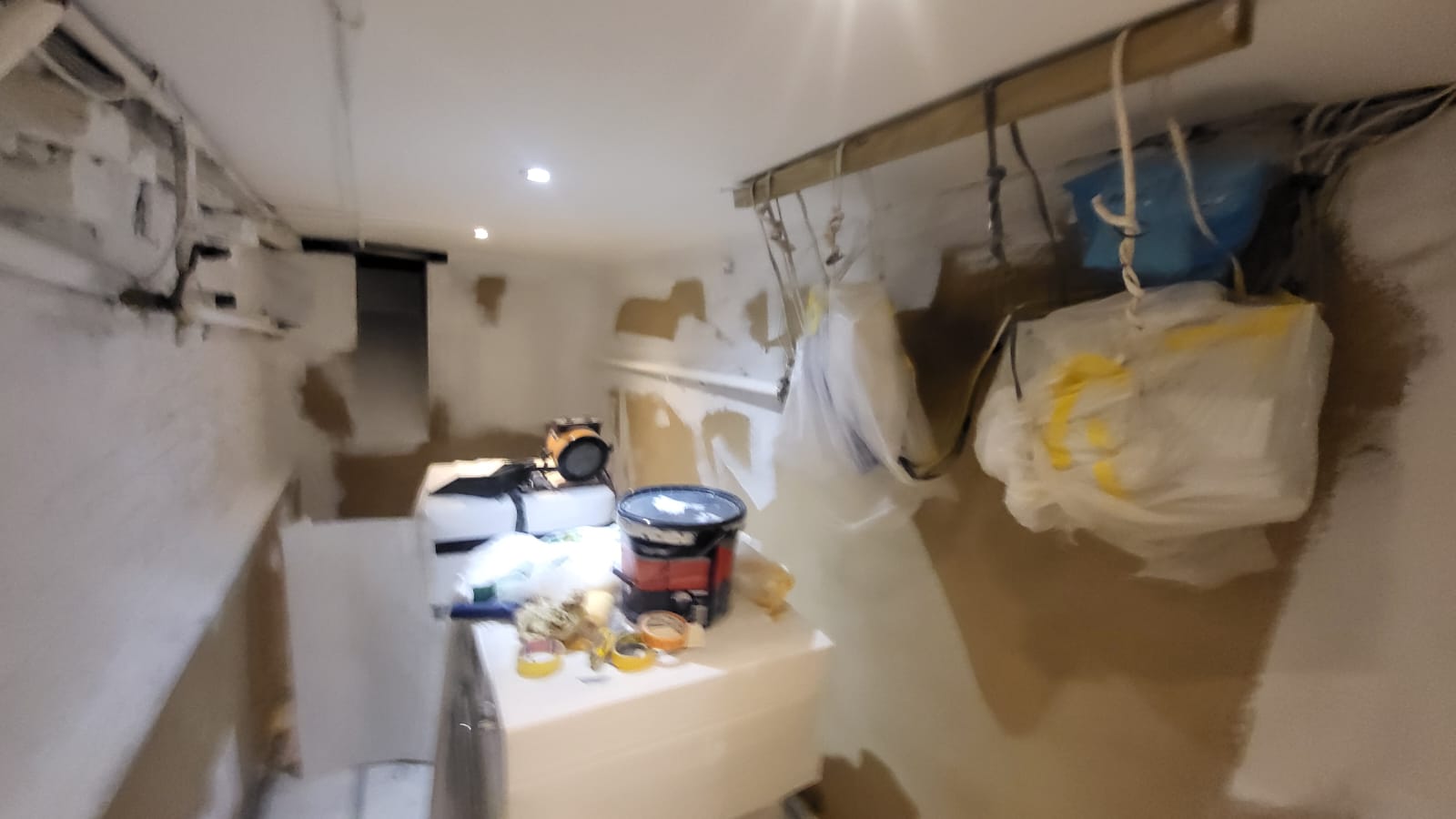
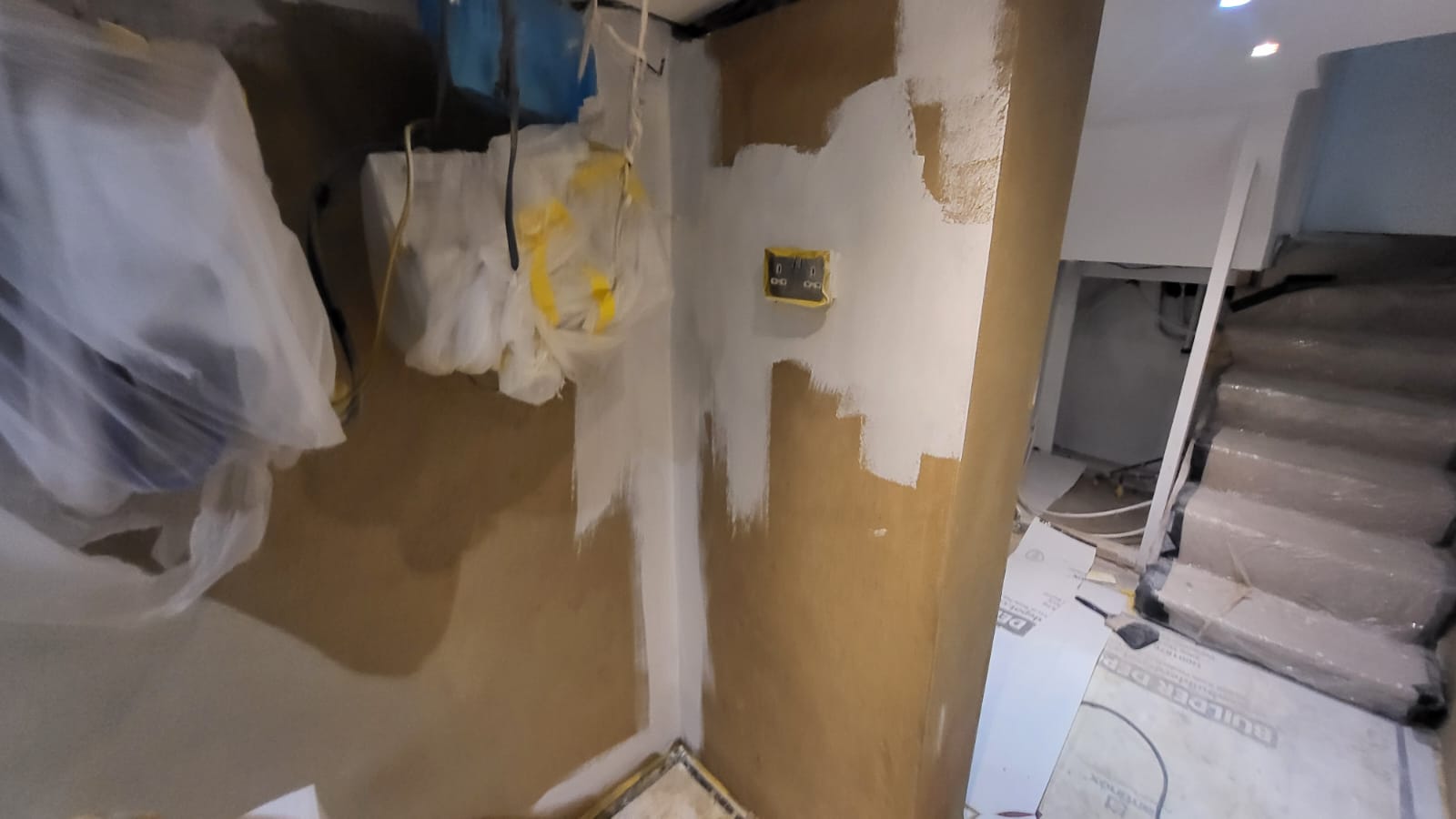
The boiler and the consumer unit stayed where they were. Both were bagged in plastic and taped. Cables were unclipped from the walls and hung from a timber batten fixed across the ceiling, clear of wet render and clear of a trowel.
None of this shows in the finished room. But if you cannot reach the bottom metre of a wall, you cannot treat it — and a treated wall with a missed section is not a treated wall.
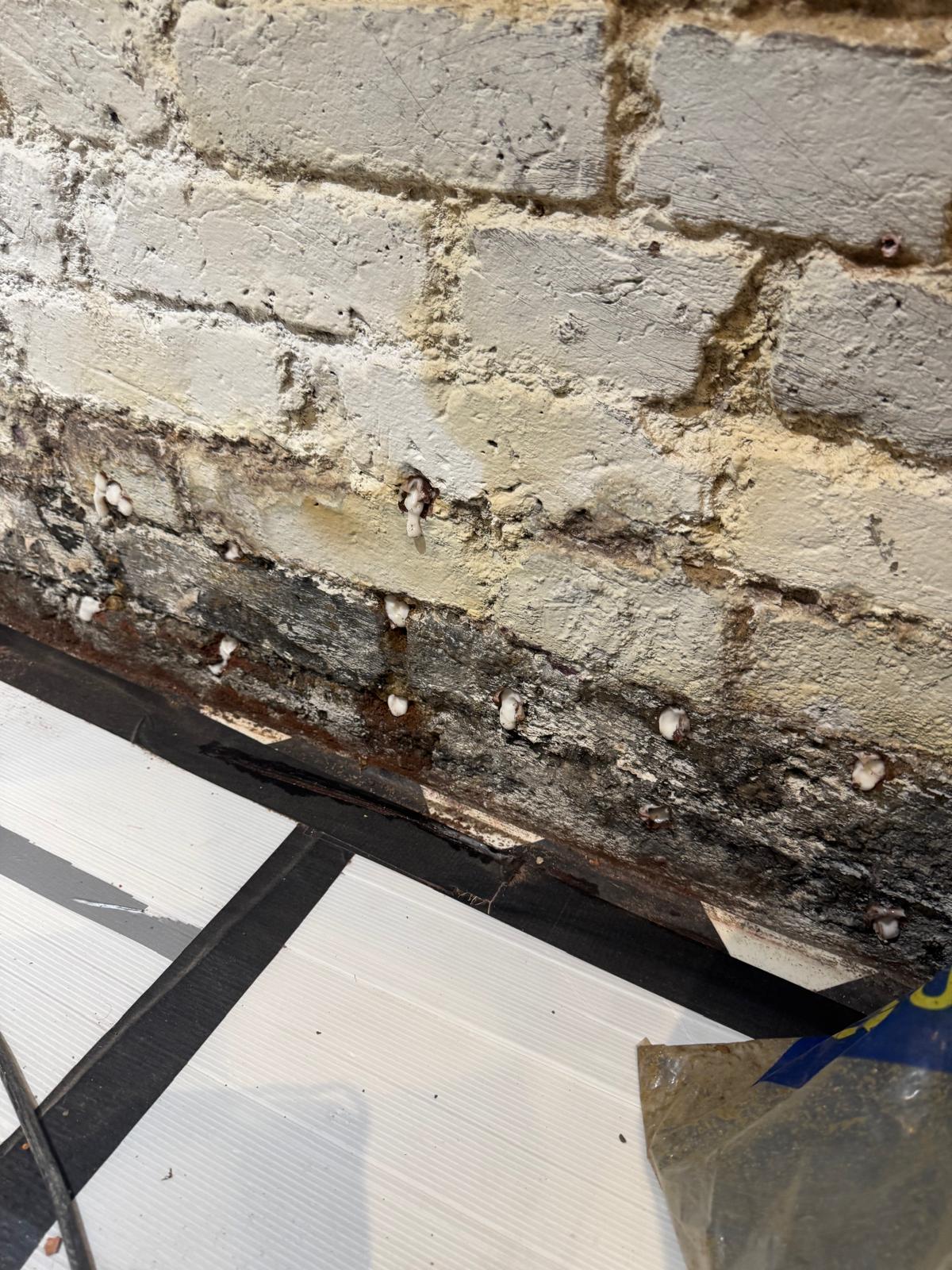
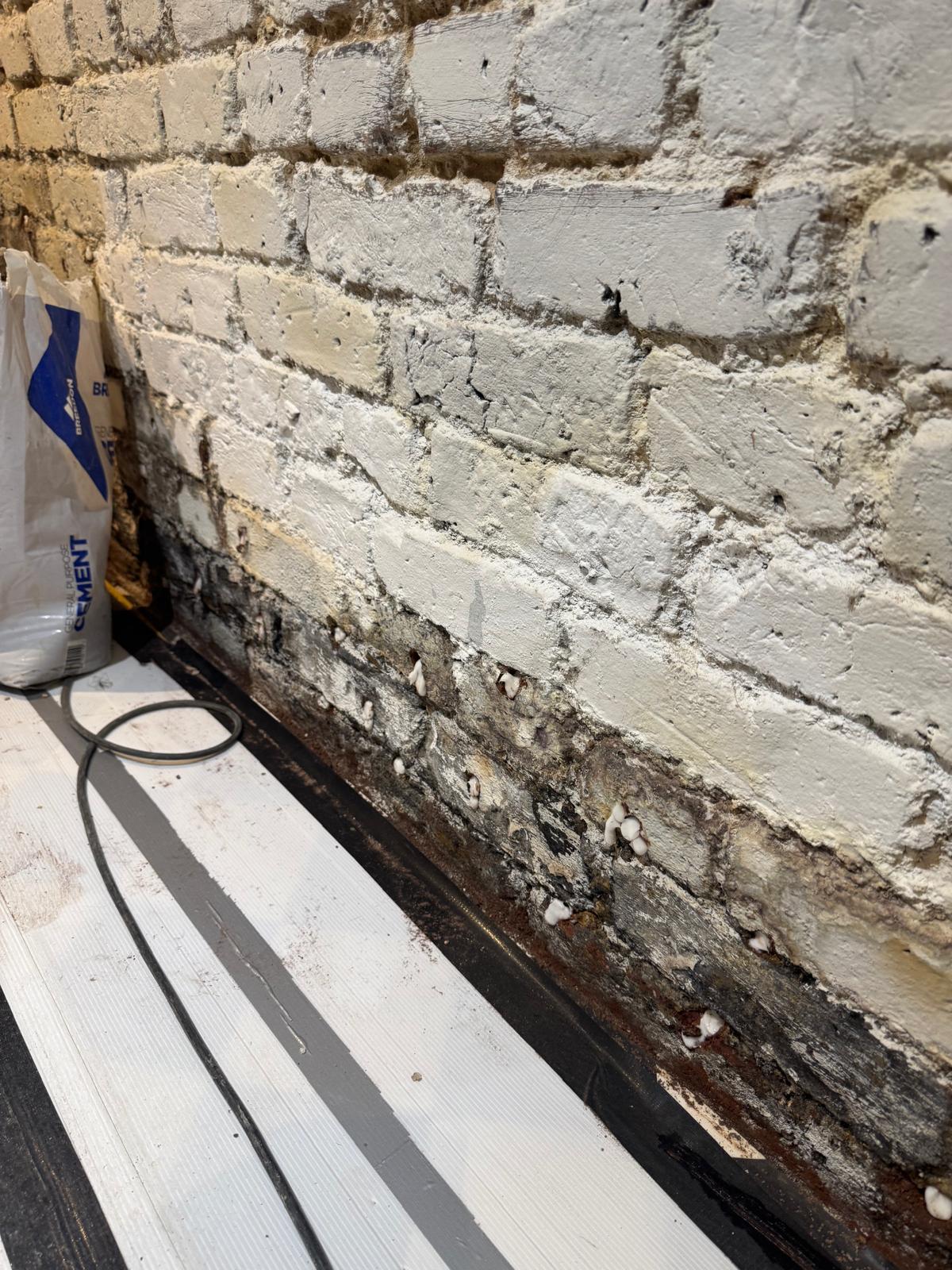
We drilled a line of holes into a mortar bed low down on each affected wall and injected damp proof cream into them. The cream spreads into the mortar and the surrounding brick and cures into a water repellent band — a new damp proof course formed inside the wall that is already standing, without taking anything down.
You can see it in the photographs: a row of drilled holes with white cream standing proud of each one, at an even height and spacing. The spacing is the whole job, because a gap in the line of injection is a gap in the barrier and water will find it.
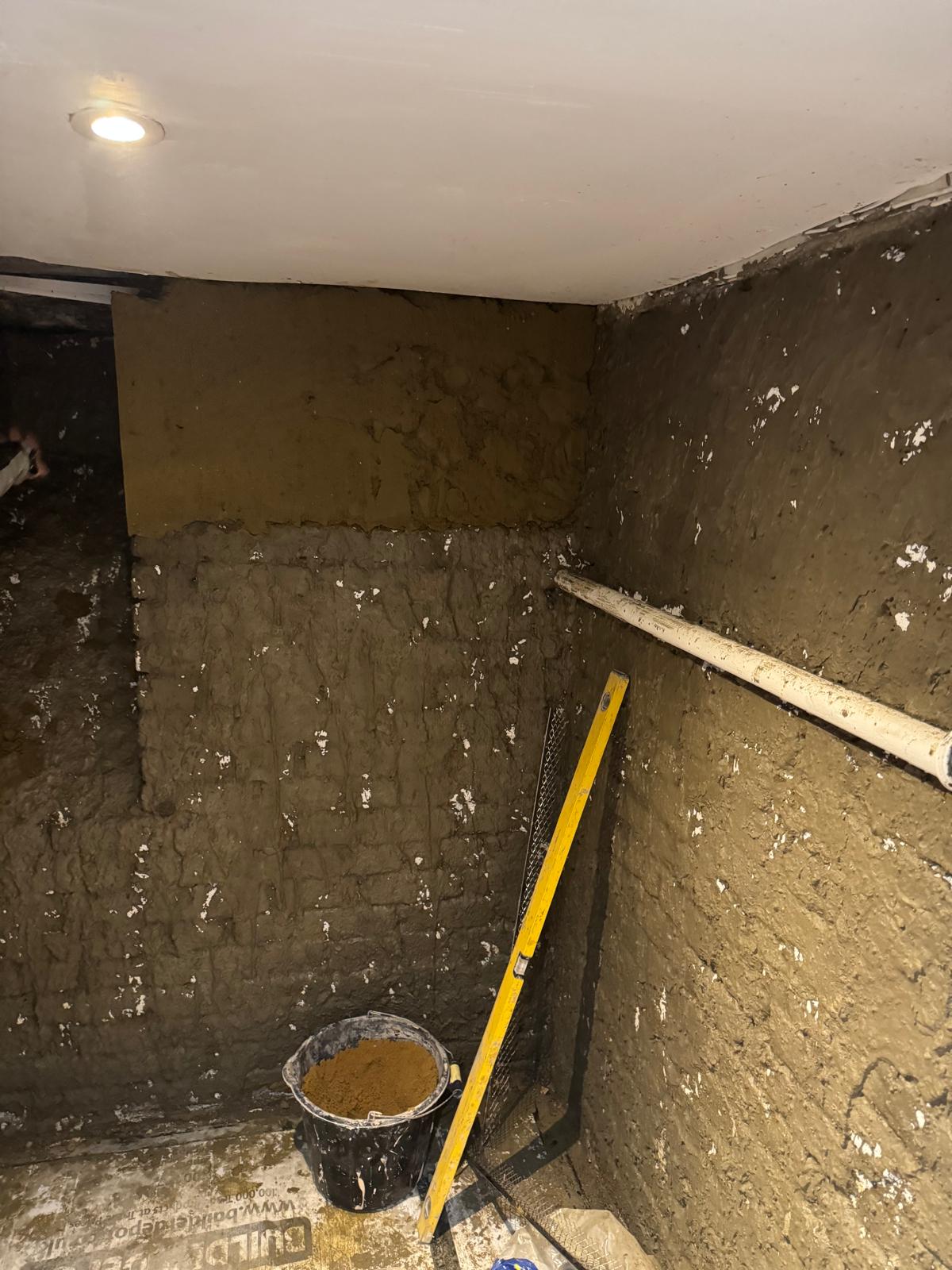
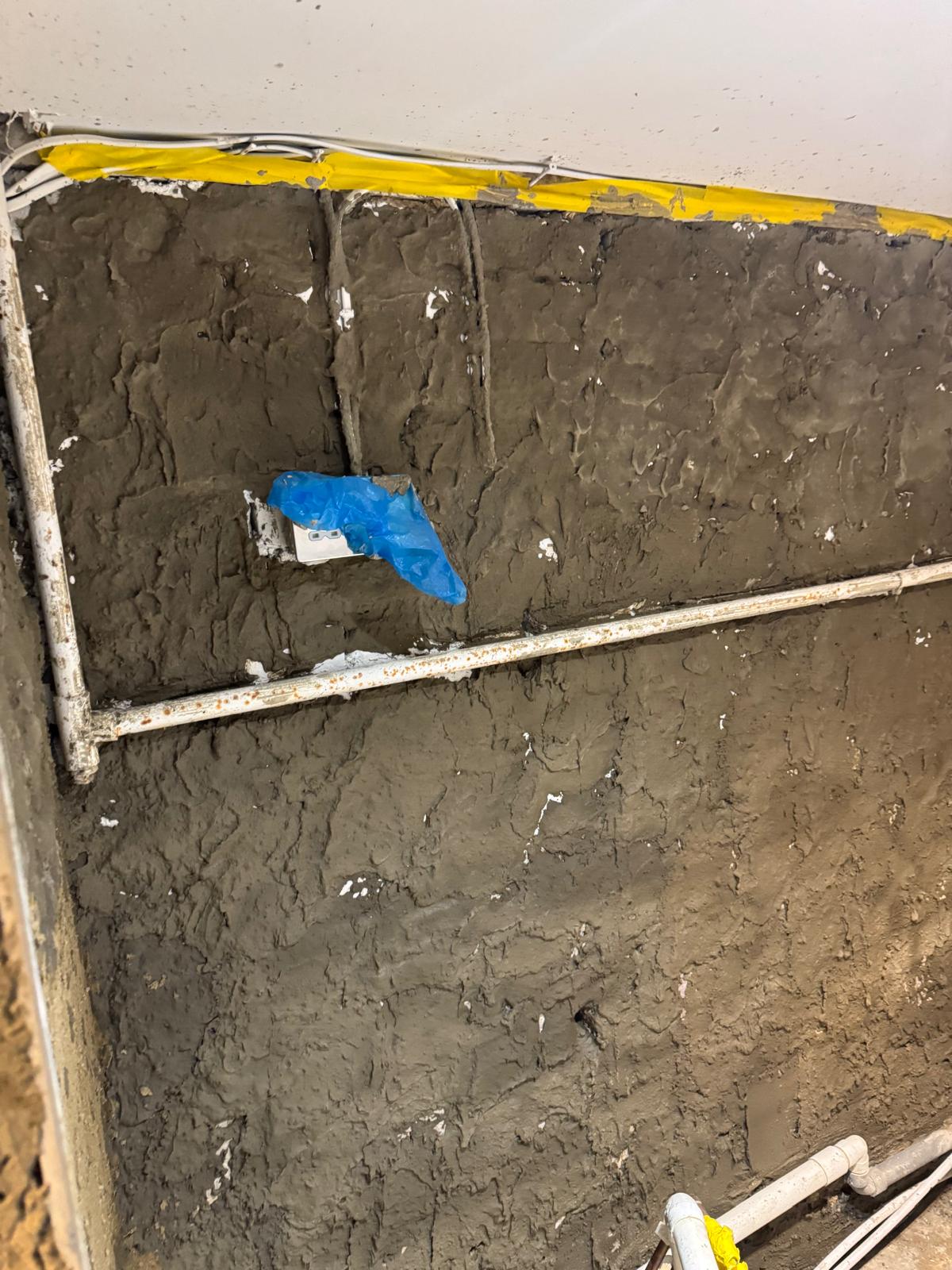
Injection stops the water rising. It does nothing about the salt-contaminated finish already on the wall, so that came off back to bare brick across the damp zone.
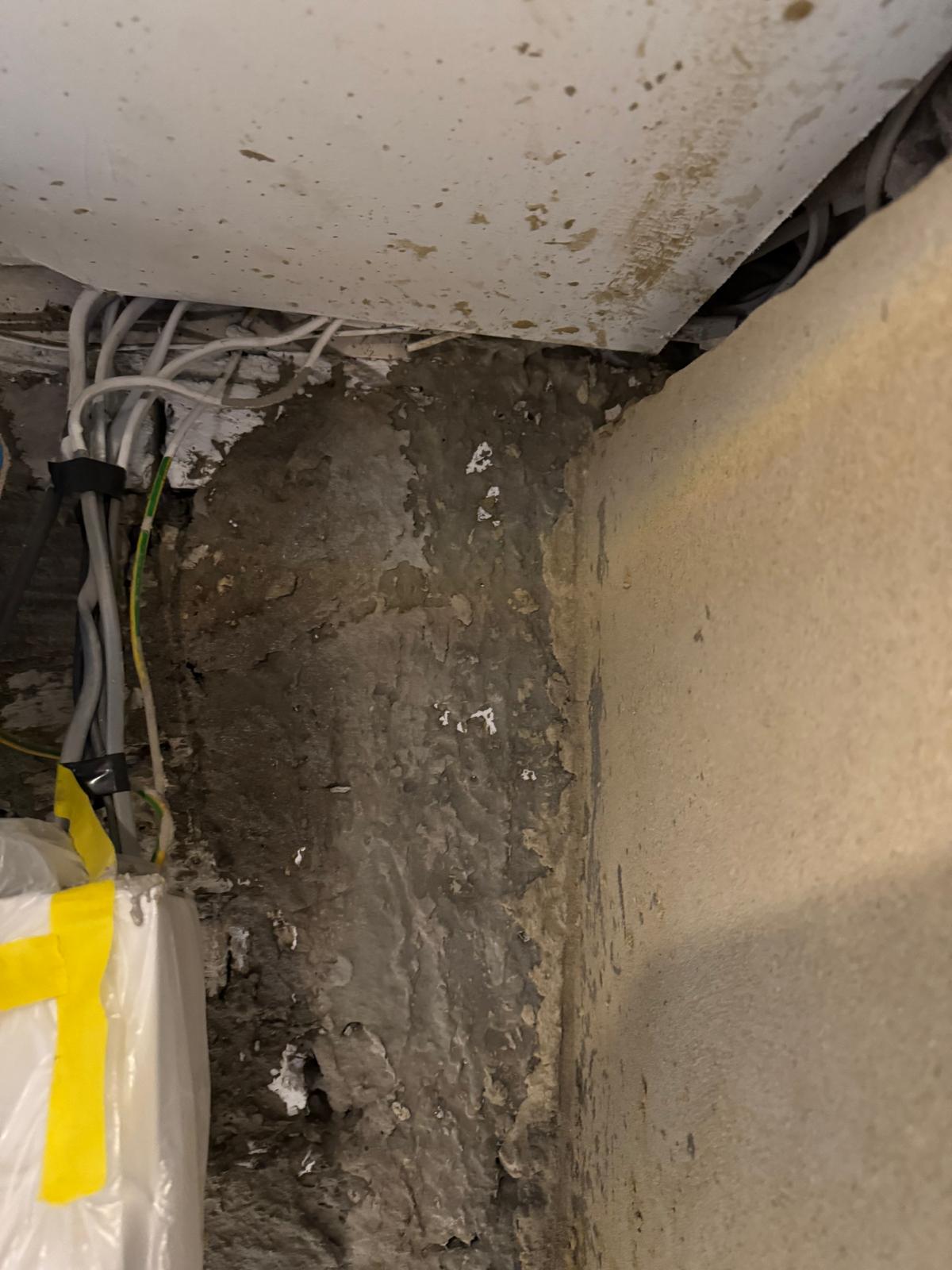
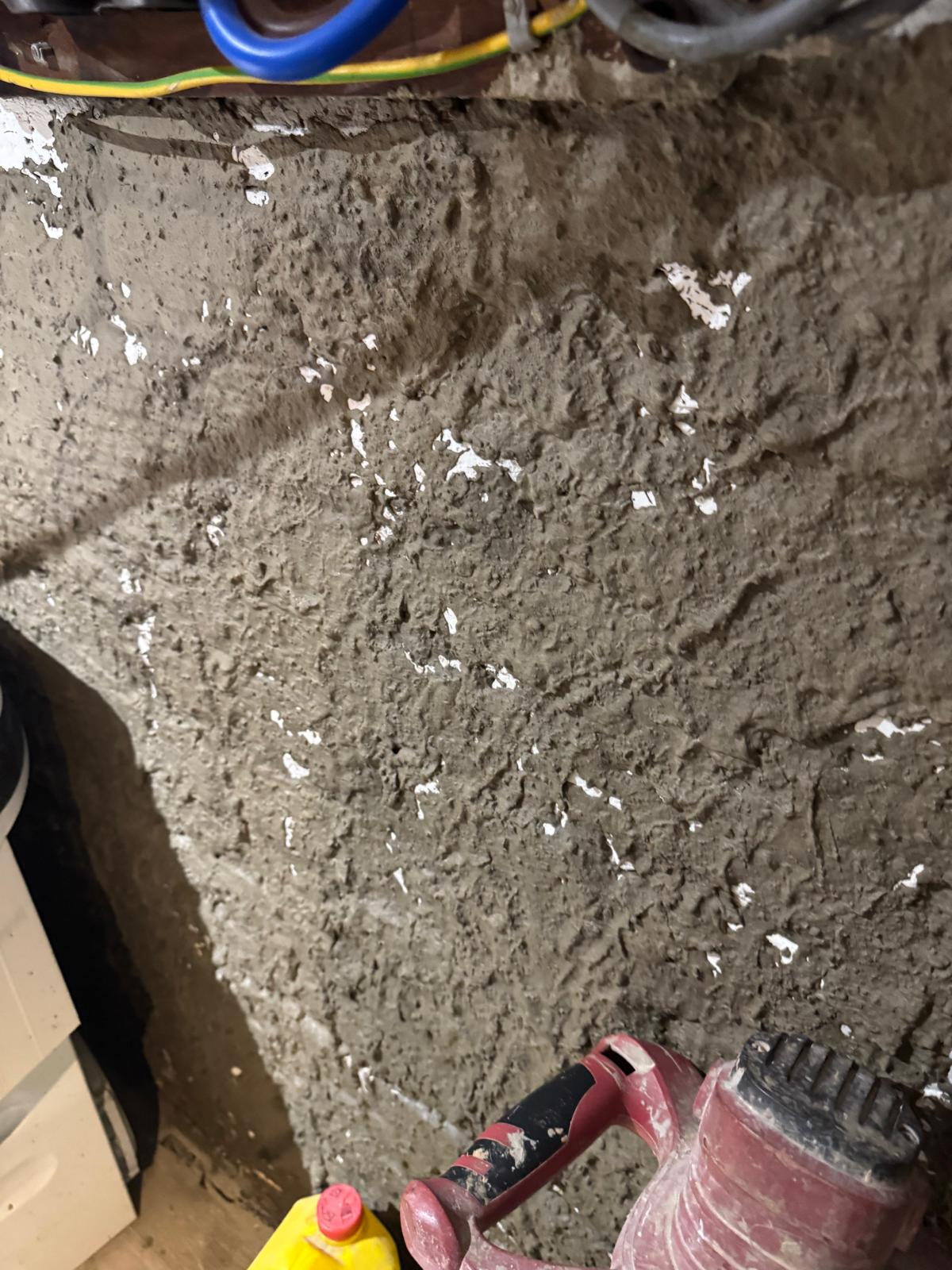
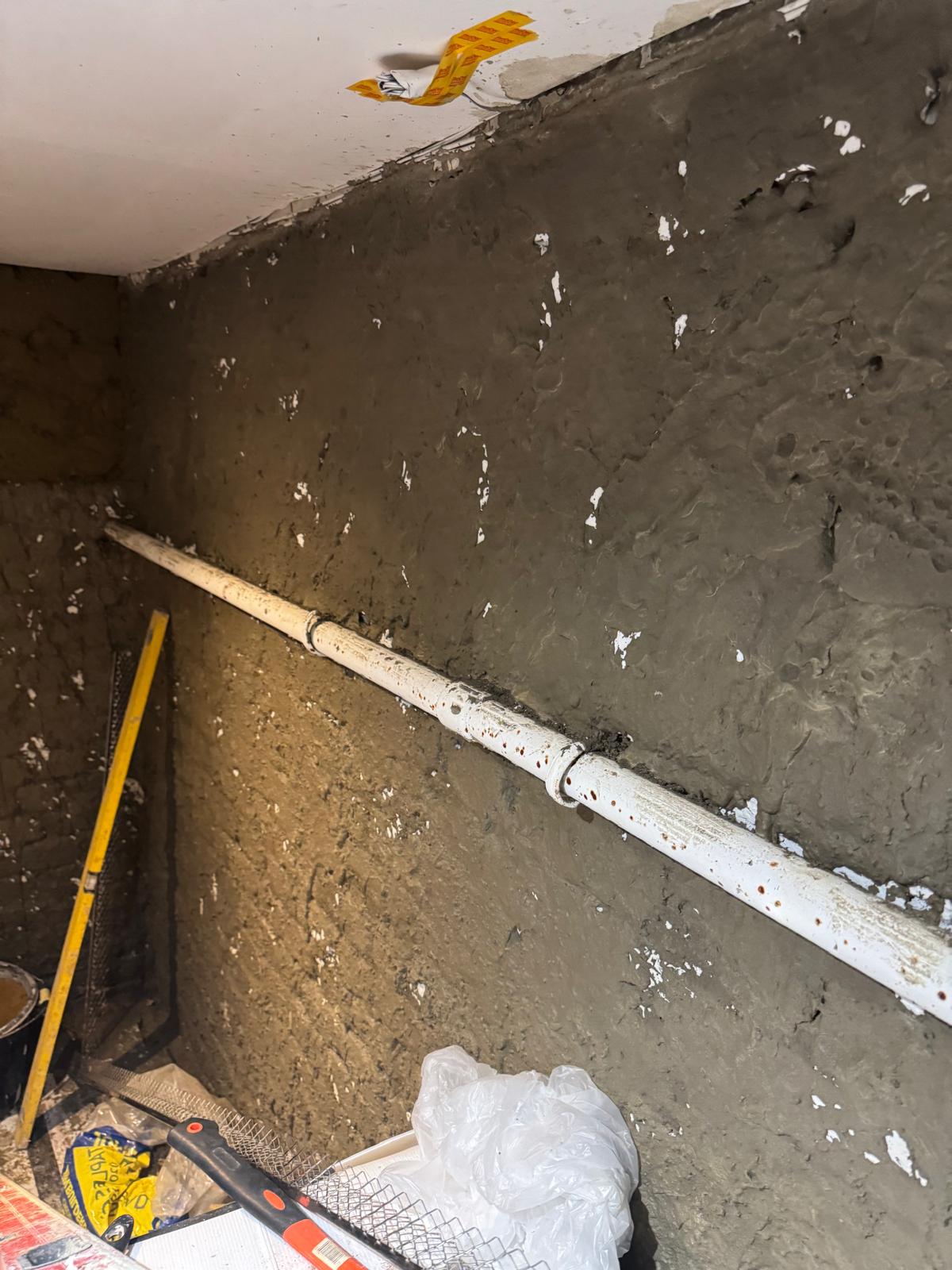
The walls were then rendered in cement gauged with Sika waterproof liquid. The additive goes into the mixing water, so the whole coat resists moisture rather than relying on something brushed over the top afterwards. Expanded metal lath went in at the corners and at the junctions between new render and existing wall — the lines where cracks otherwise turn up a year or two later.
Where the damp had only ever reached a metre or so, the render stops at that height and the sound painted brick above it was left alone. There is no point hacking off a wall that is dry; it costs the client money and gains nothing.
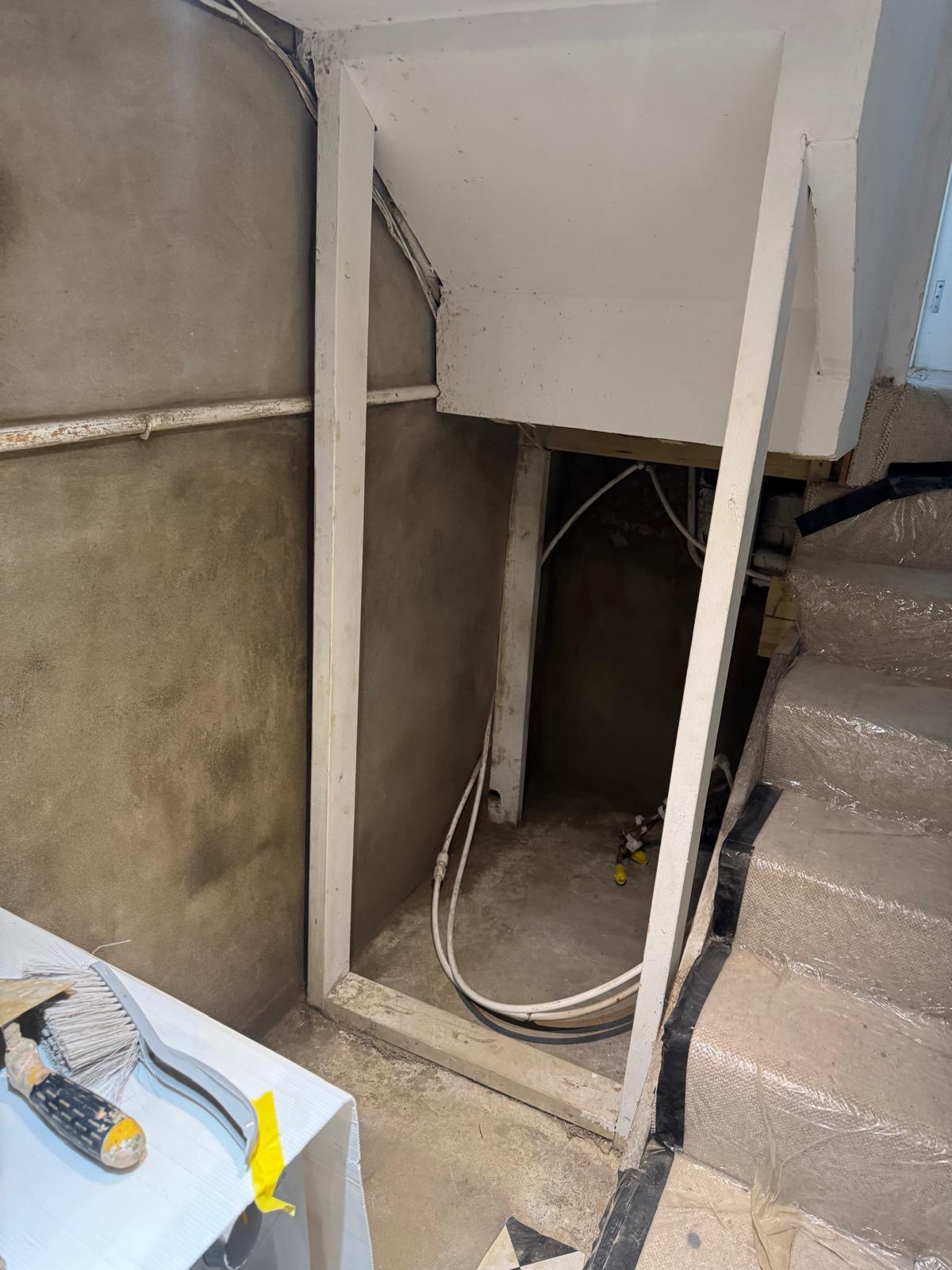
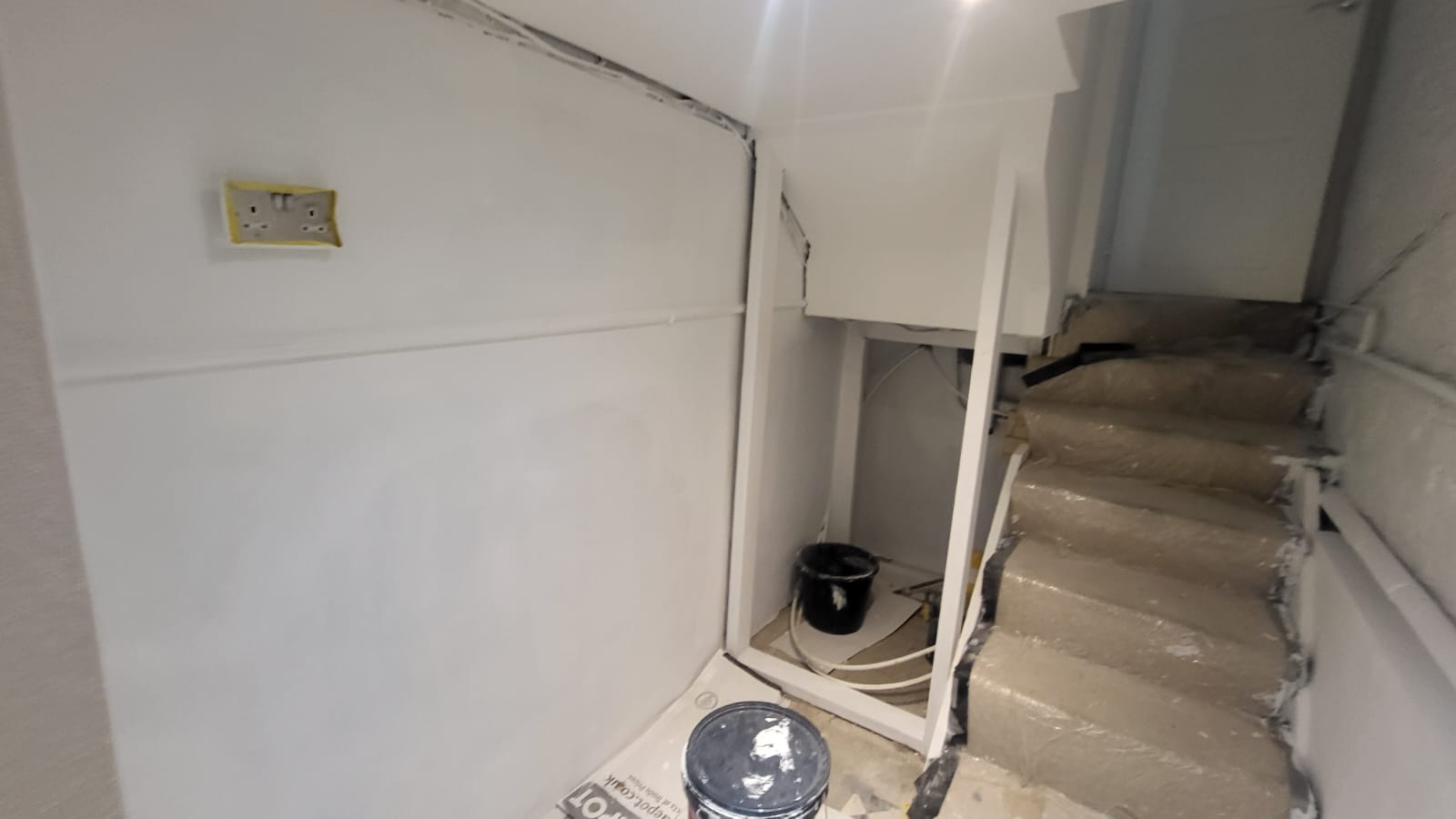
Pipework running along the walls was cut in around rather than boxed over, so the runs stay accessible.
Once the render had dried out we painted the ceiling, the walls and the woodwork.
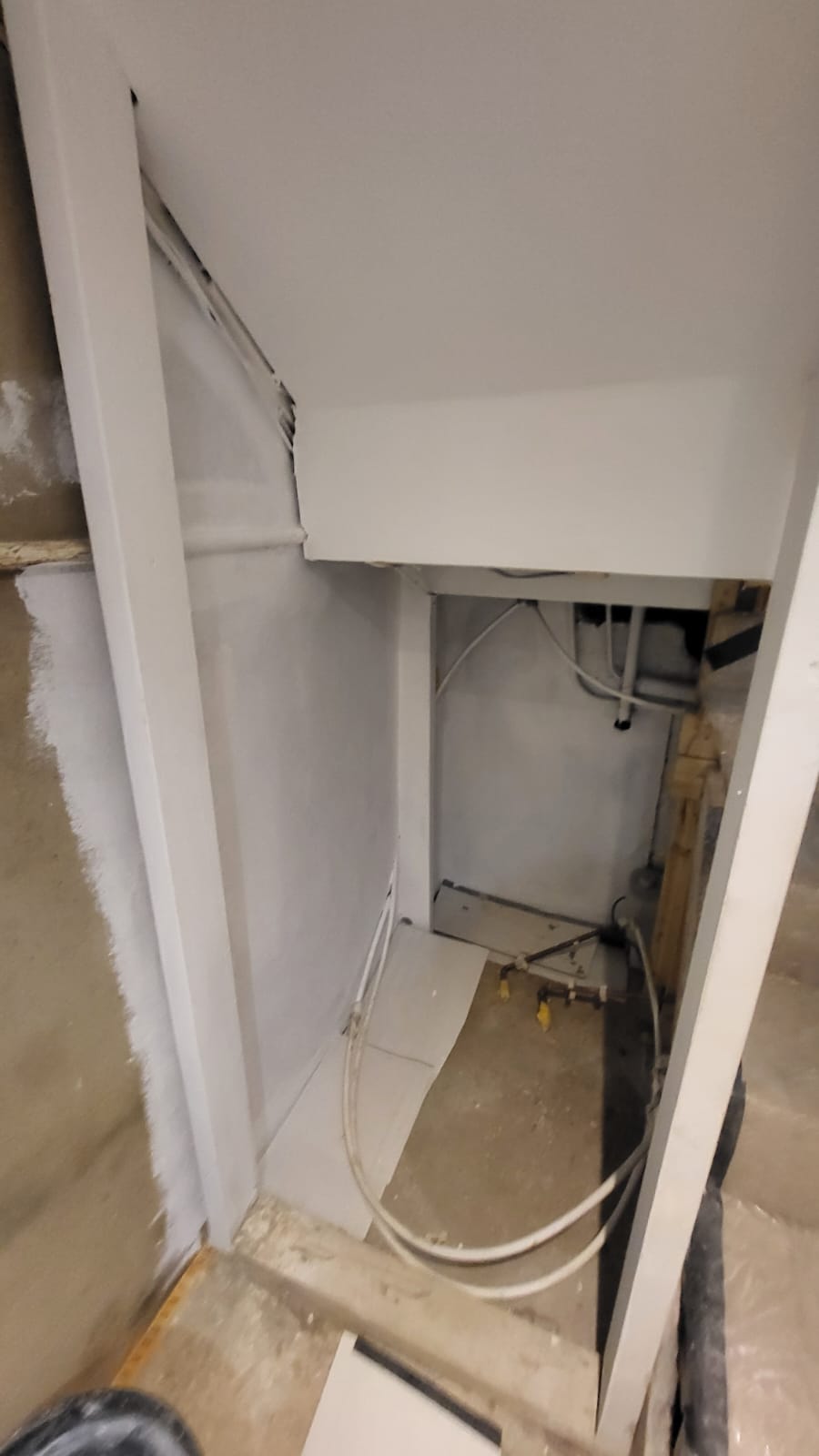
Then the utility room went back — same appliances, same positions, reconnected, standing on the original chequerboard floor, which was cleaned rather than replaced. The cupboard under the stairs carries pipework and had the same problem as the rest of the cellar, so it was treated and finished at the same time.
The room now does what a cellar in a house this size should do: takes the laundry, houses the plant, and does not announce itself from the top of the stairs.
This was not an empty building site. The house was lived in, the boiler had to keep running, and the consumer unit could not sit dead for days at a time. Stairs and floors were sheeted, the dust was kept to the cellar, and the appliances were out of use for as short a stretch as we could manage.
Putney and the streets around it are full of houses of this period and this construction. The cellars vary. The problem rarely does.
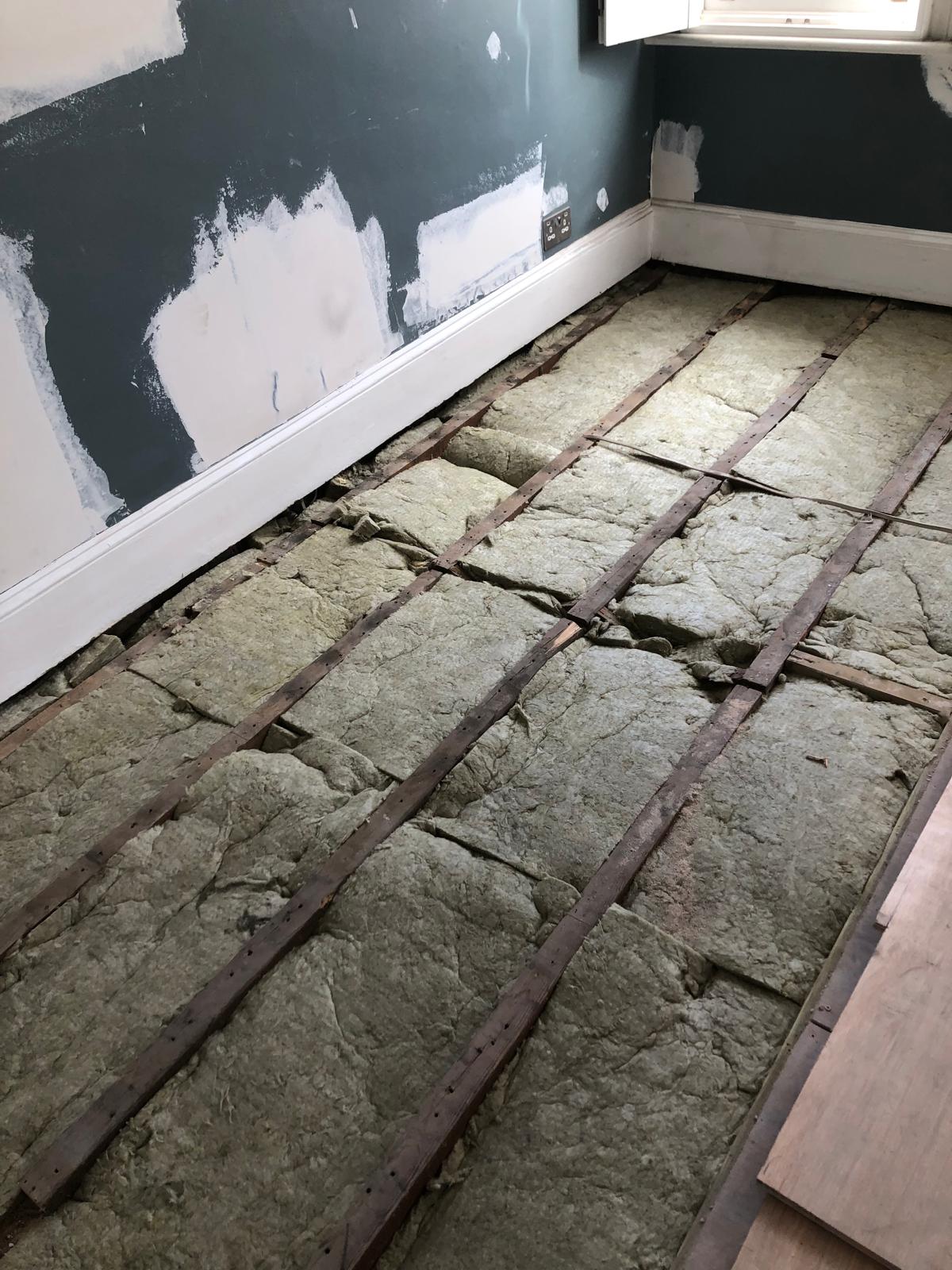
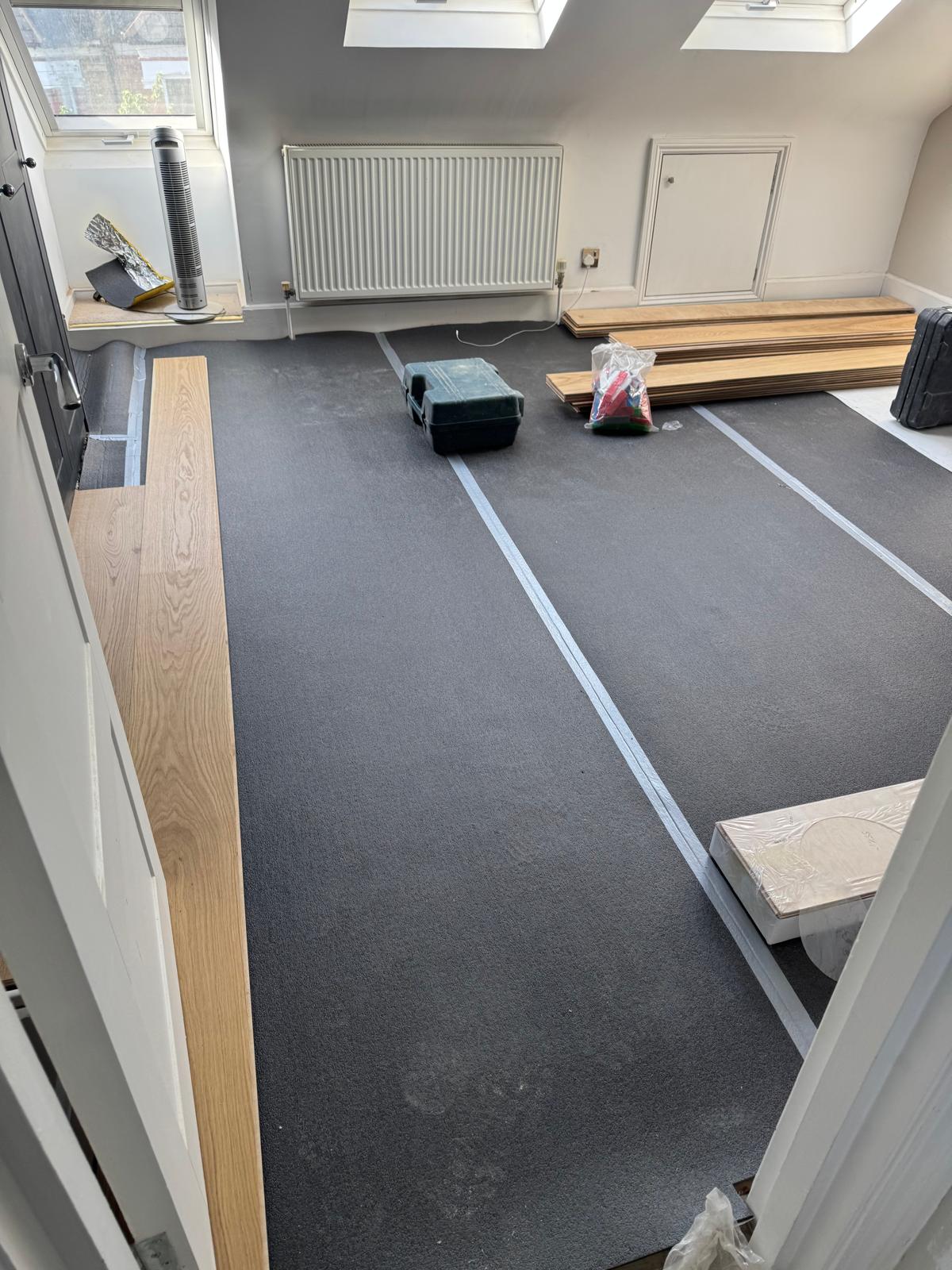
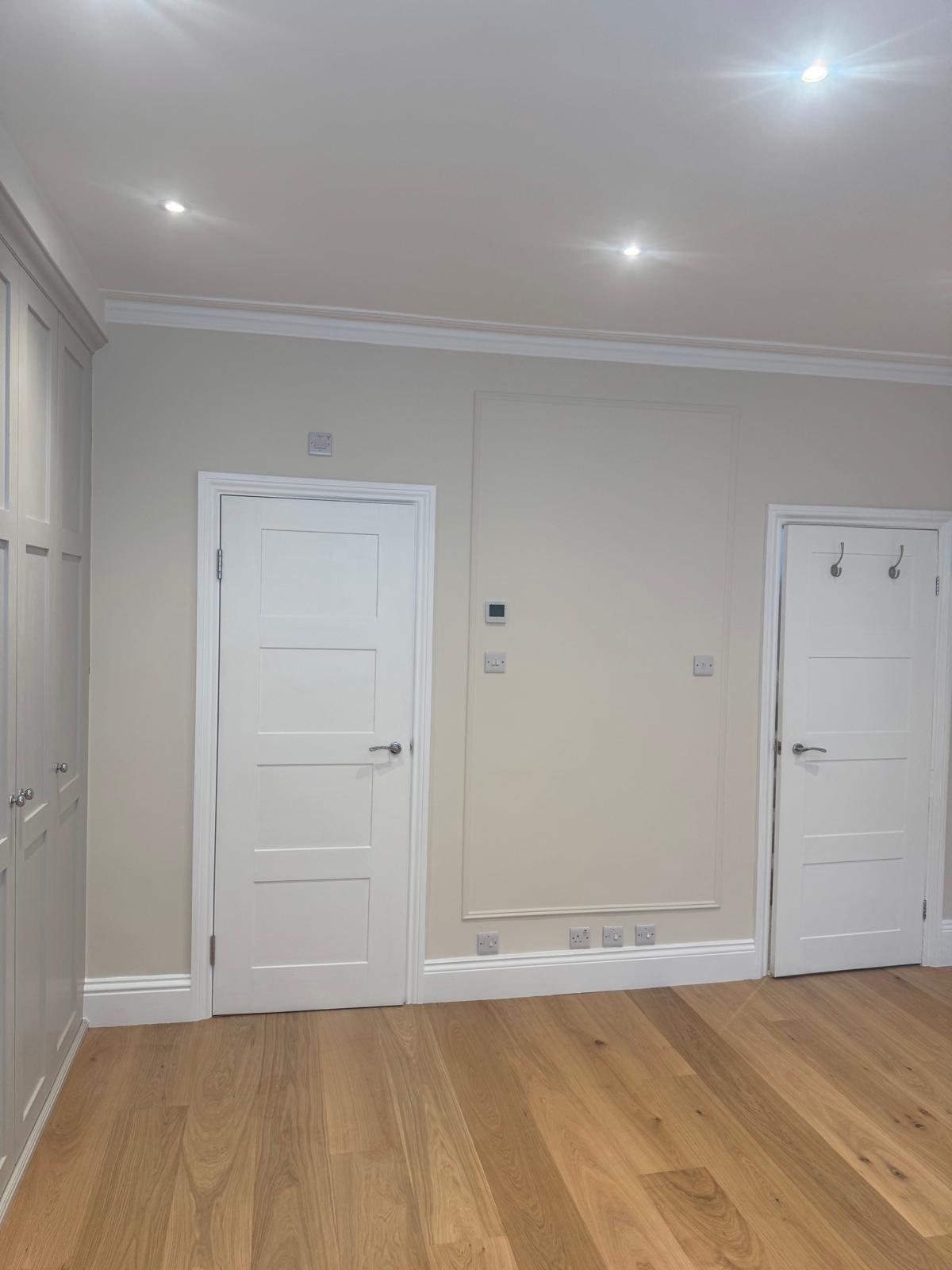
With the cellar sorted, work moved up through the house. The bedrooms and the loft were getting new floors — not a sand-and-varnish job, but the full build-up: structure, insulation, deck, underlay and solid oak on top.
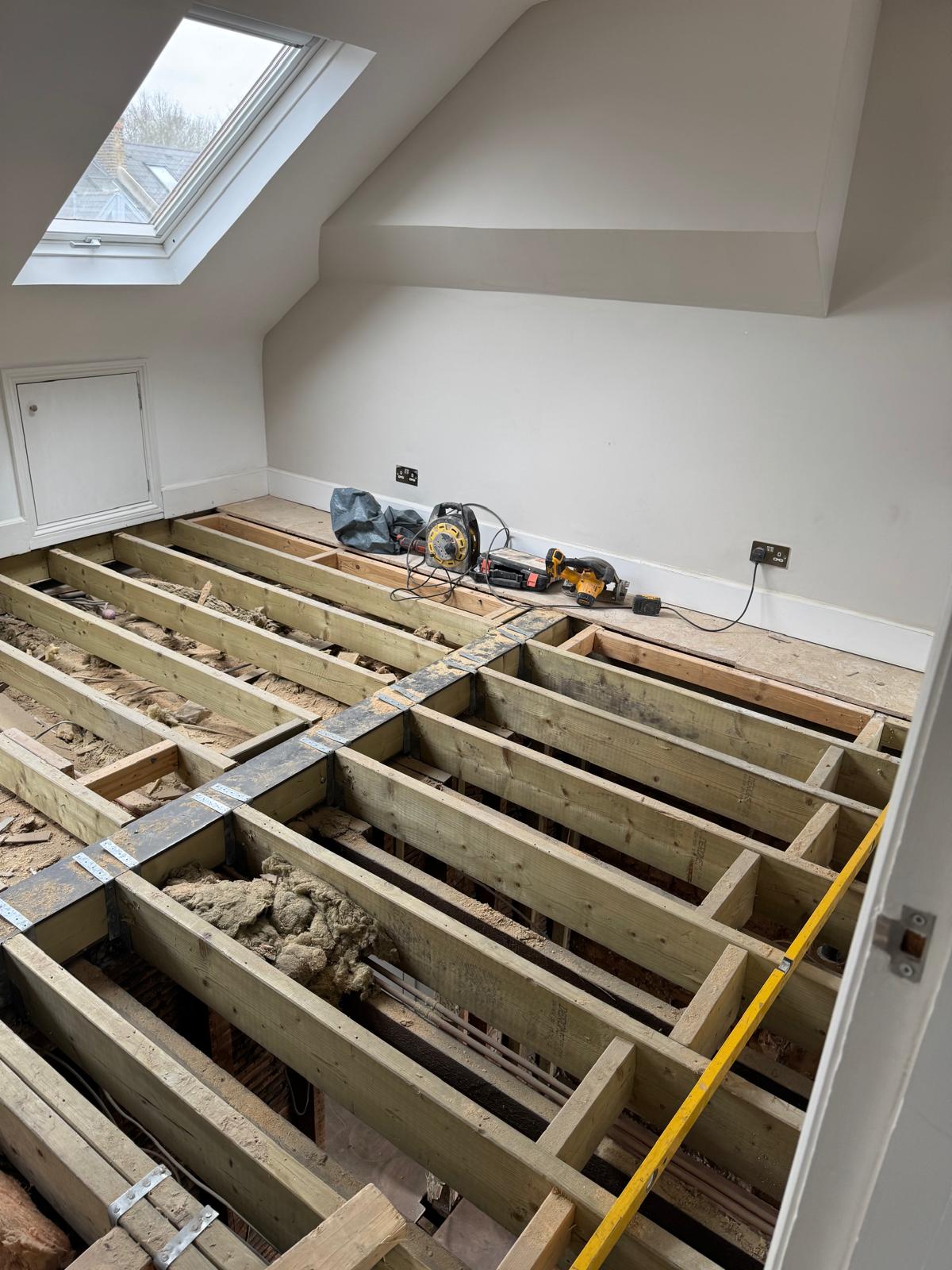
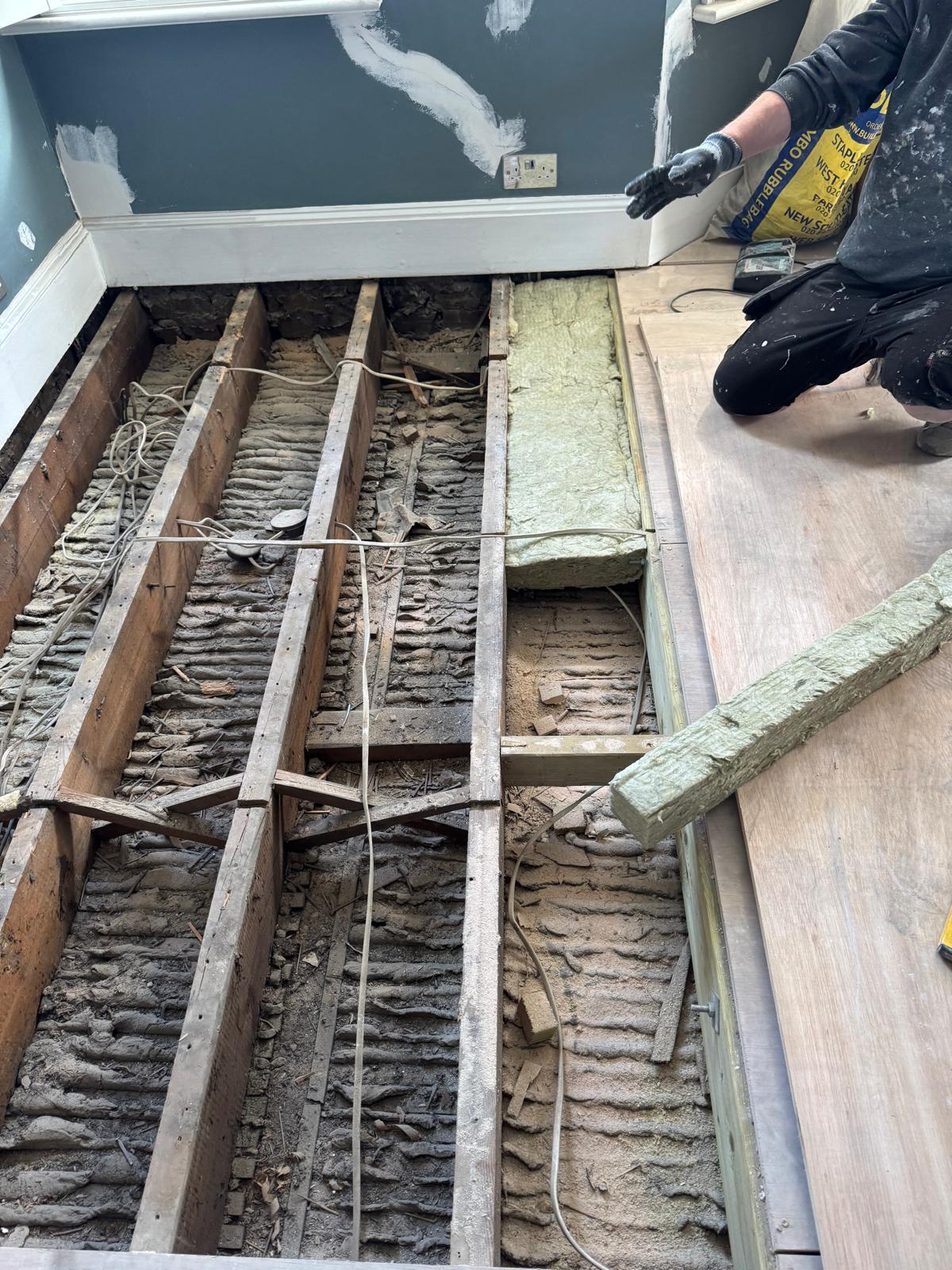
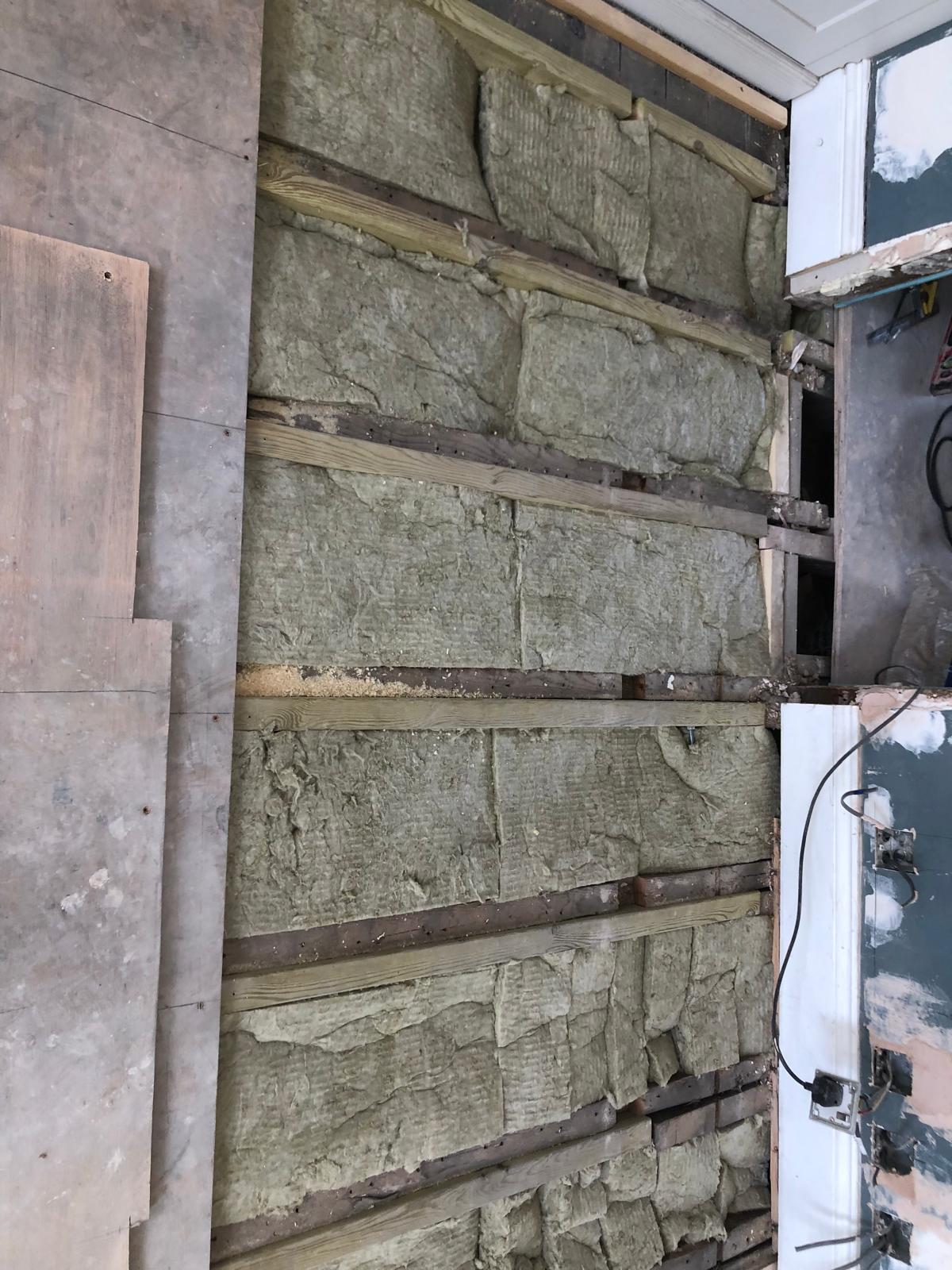
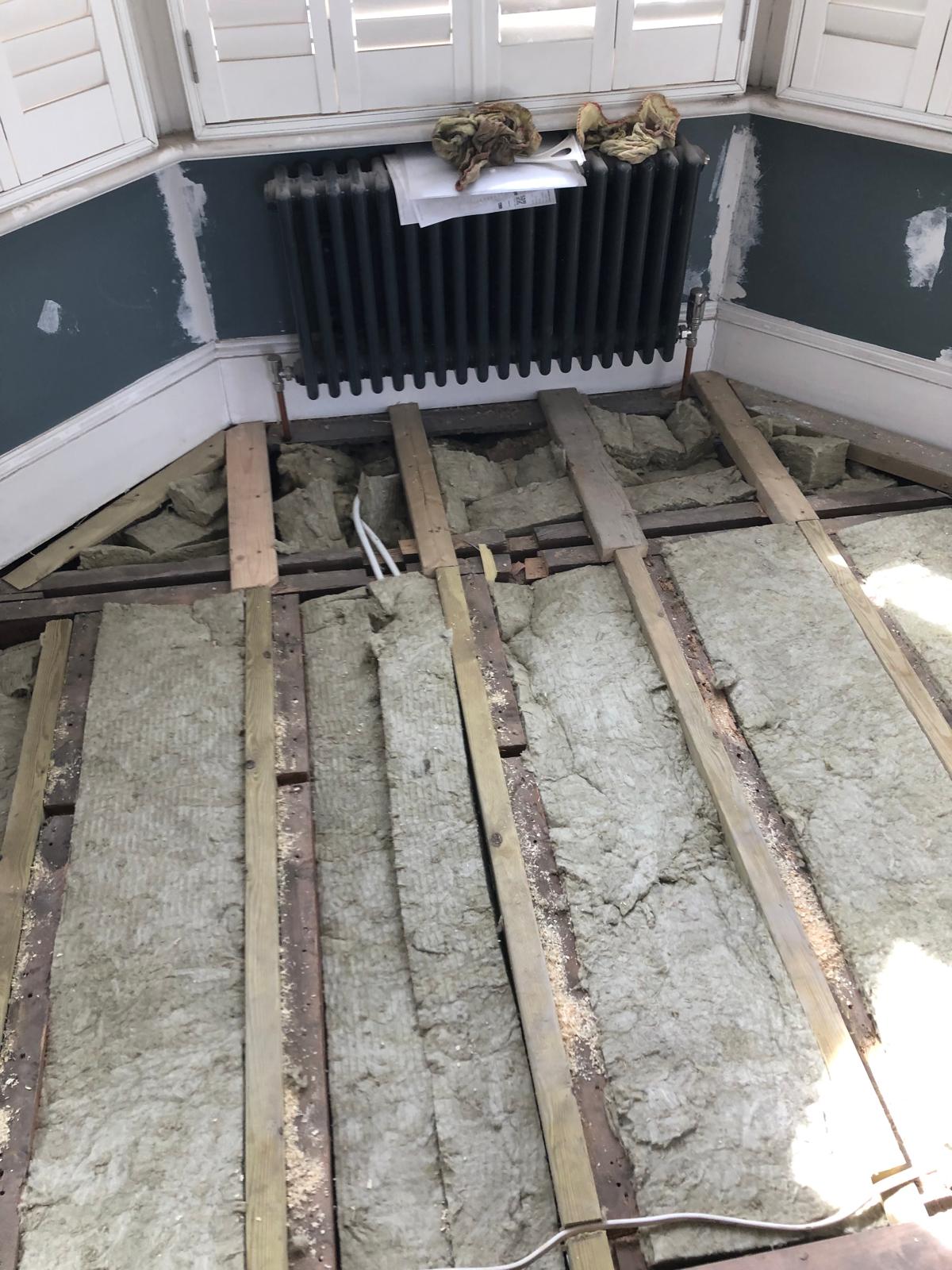
The old boards came up first, back to the bare joists. Part of the structure needed rebuilding, so new timber went in alongside the original joists, tied through with steel straps and levelled. It is the only chance you ever get to deal with what lives under a floor — old wiring, pipe runs, a century of dust — so everything was tidied before a single board went back down.
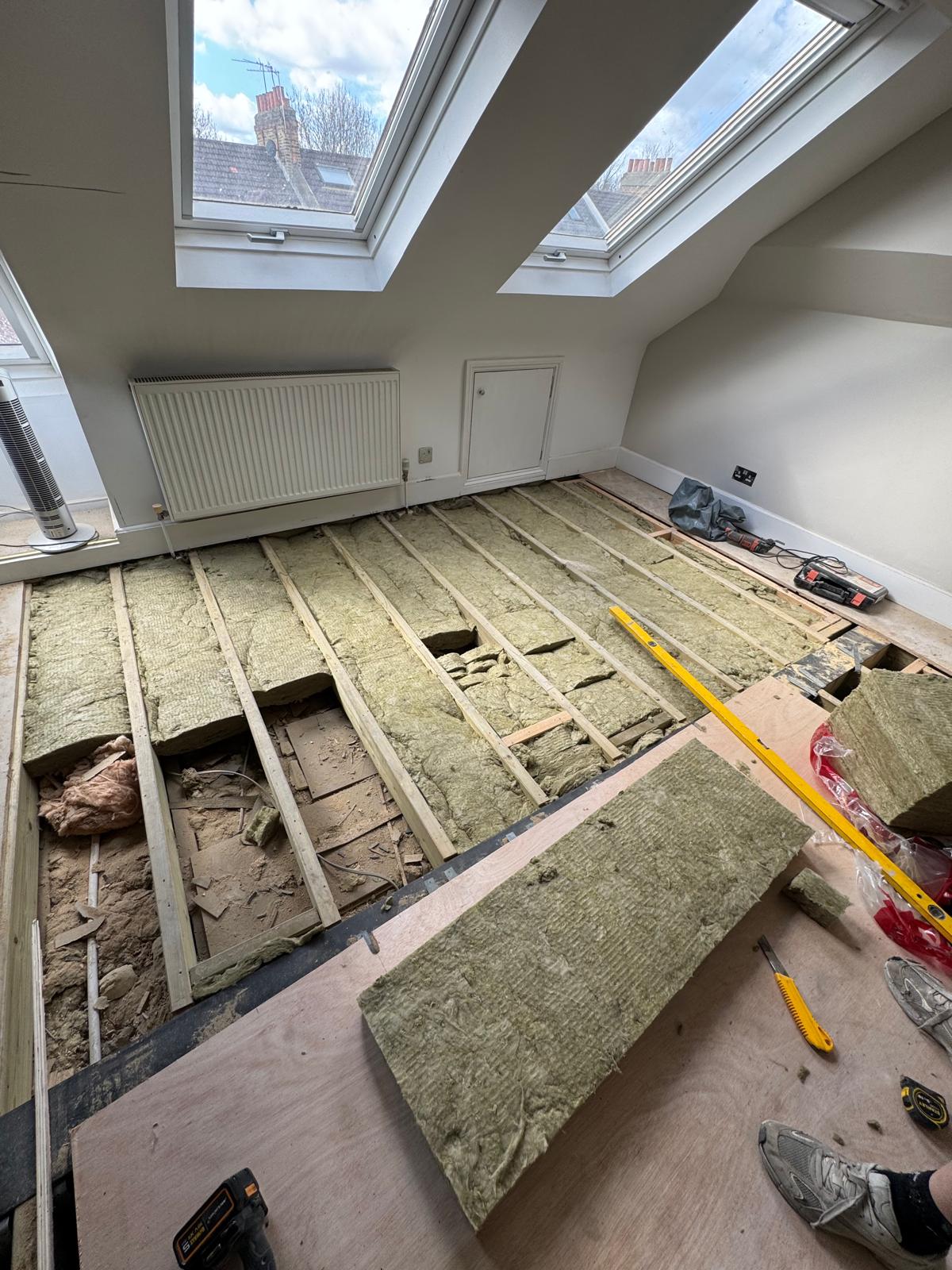
Acoustic insulation came next: mineral wool cut tight between every joist, right into the corners. The structure was then closed with plywood screwed down across the whole floor. That deck does two jobs. It stiffens the floor, and it kills the creaks that loose Edwardian boards develop over the decades.
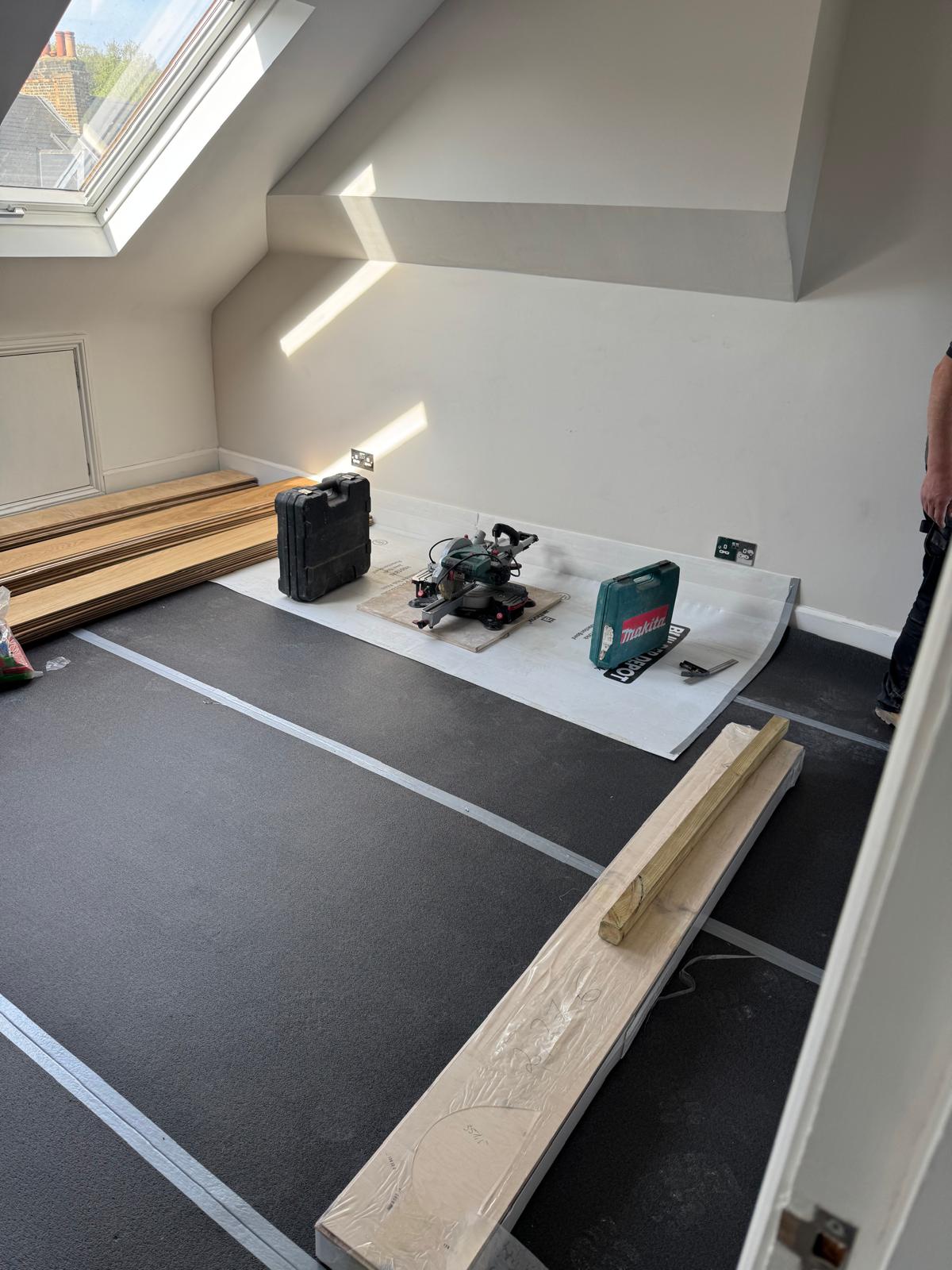
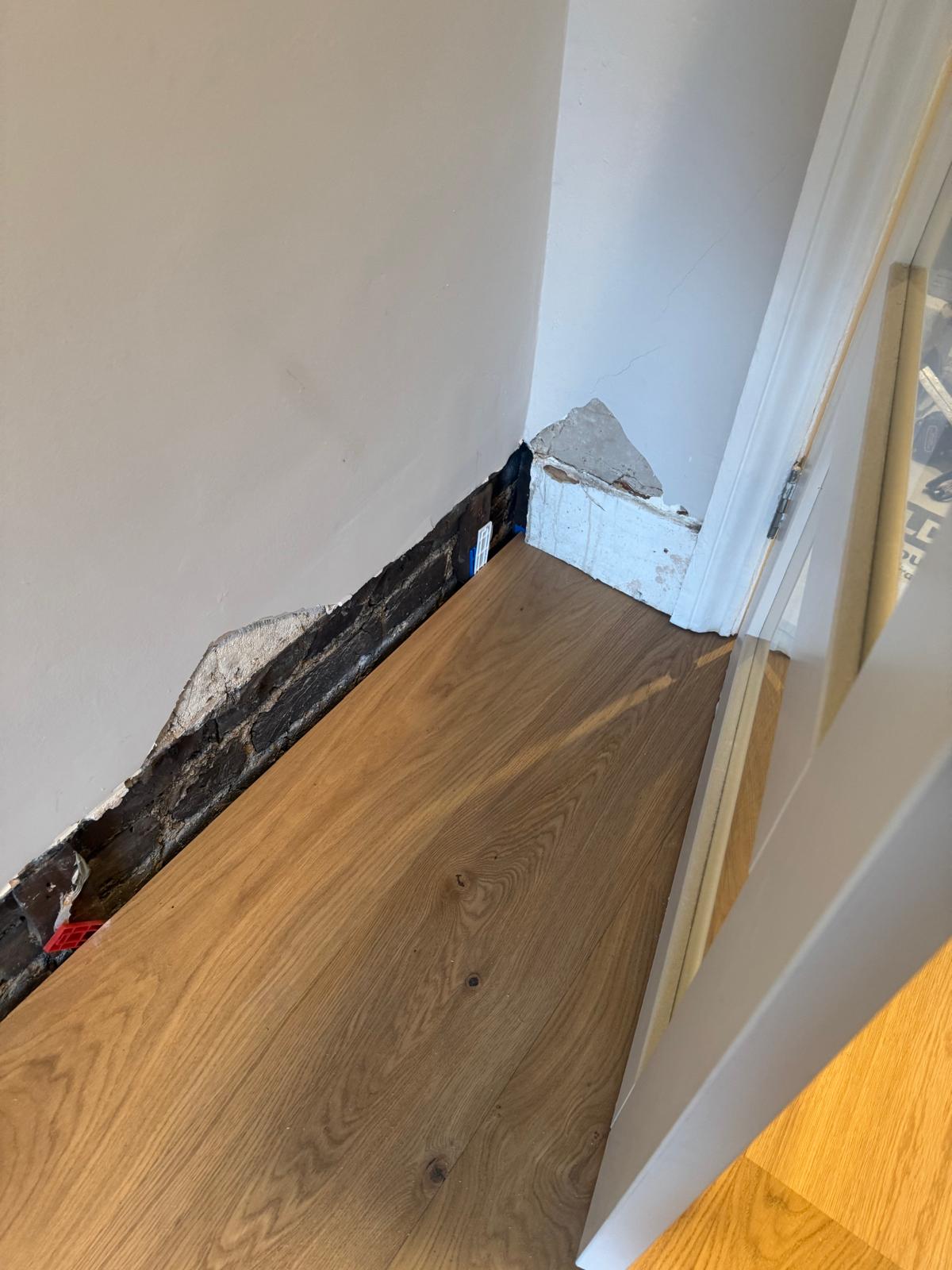
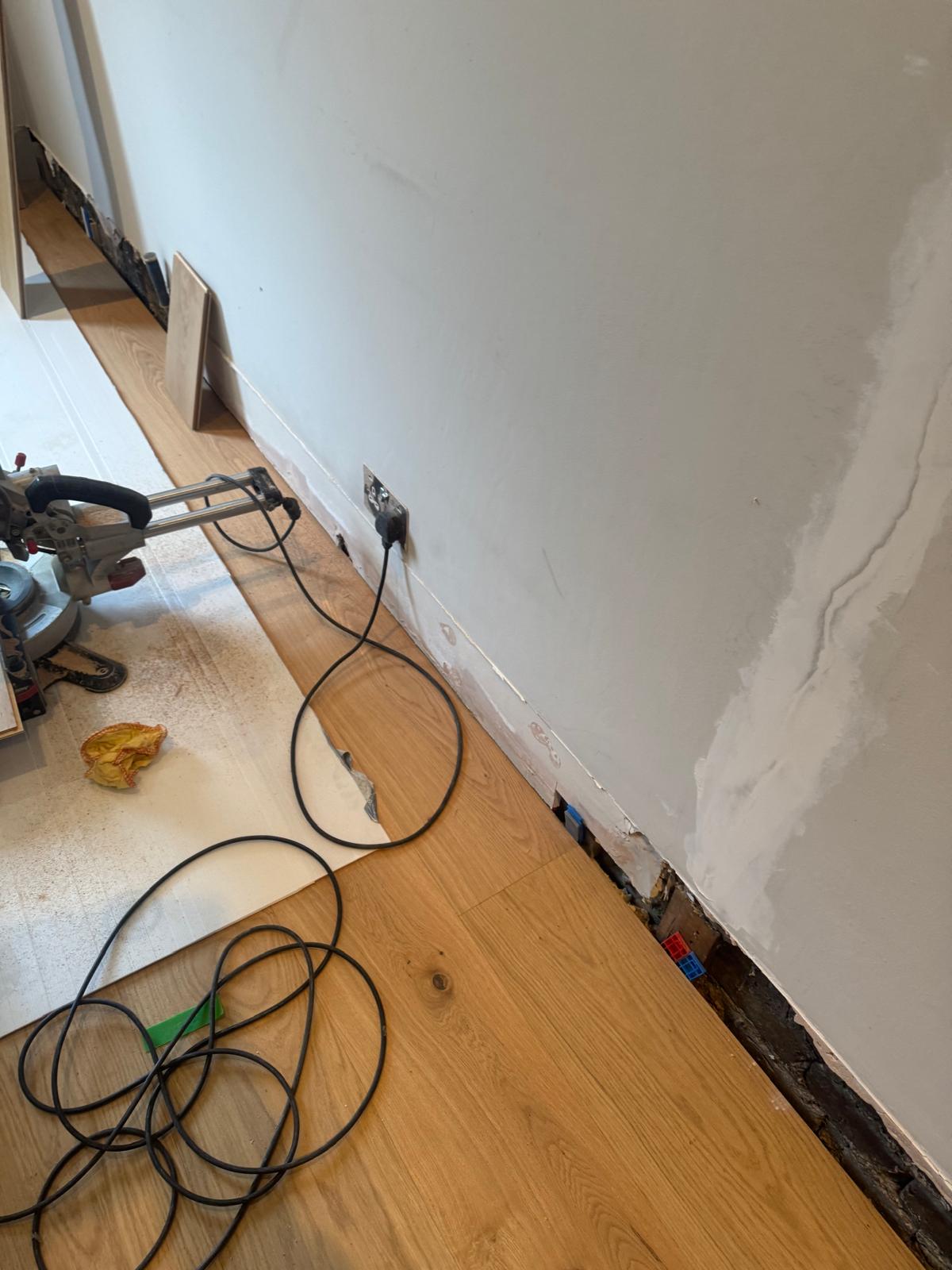
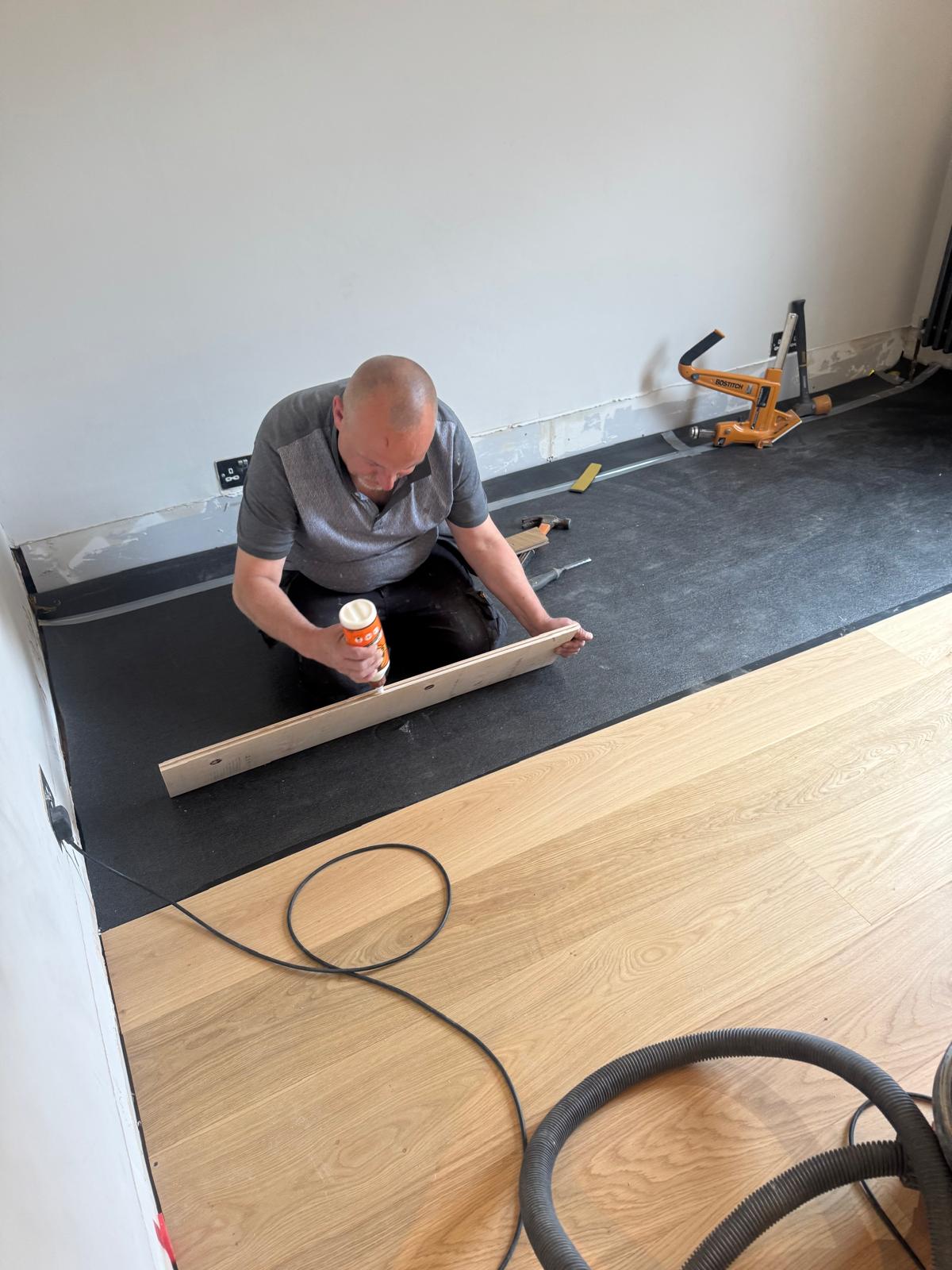
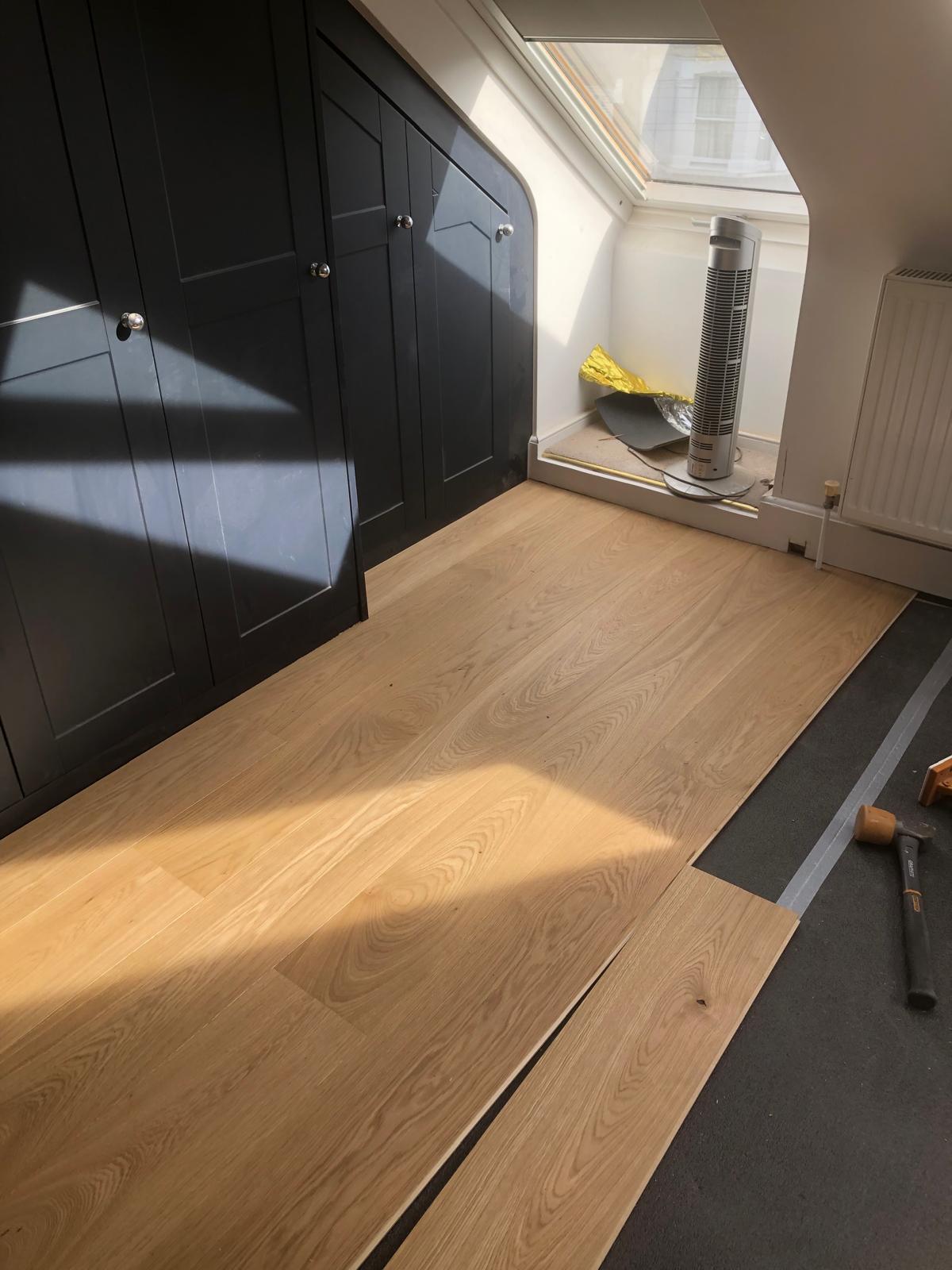
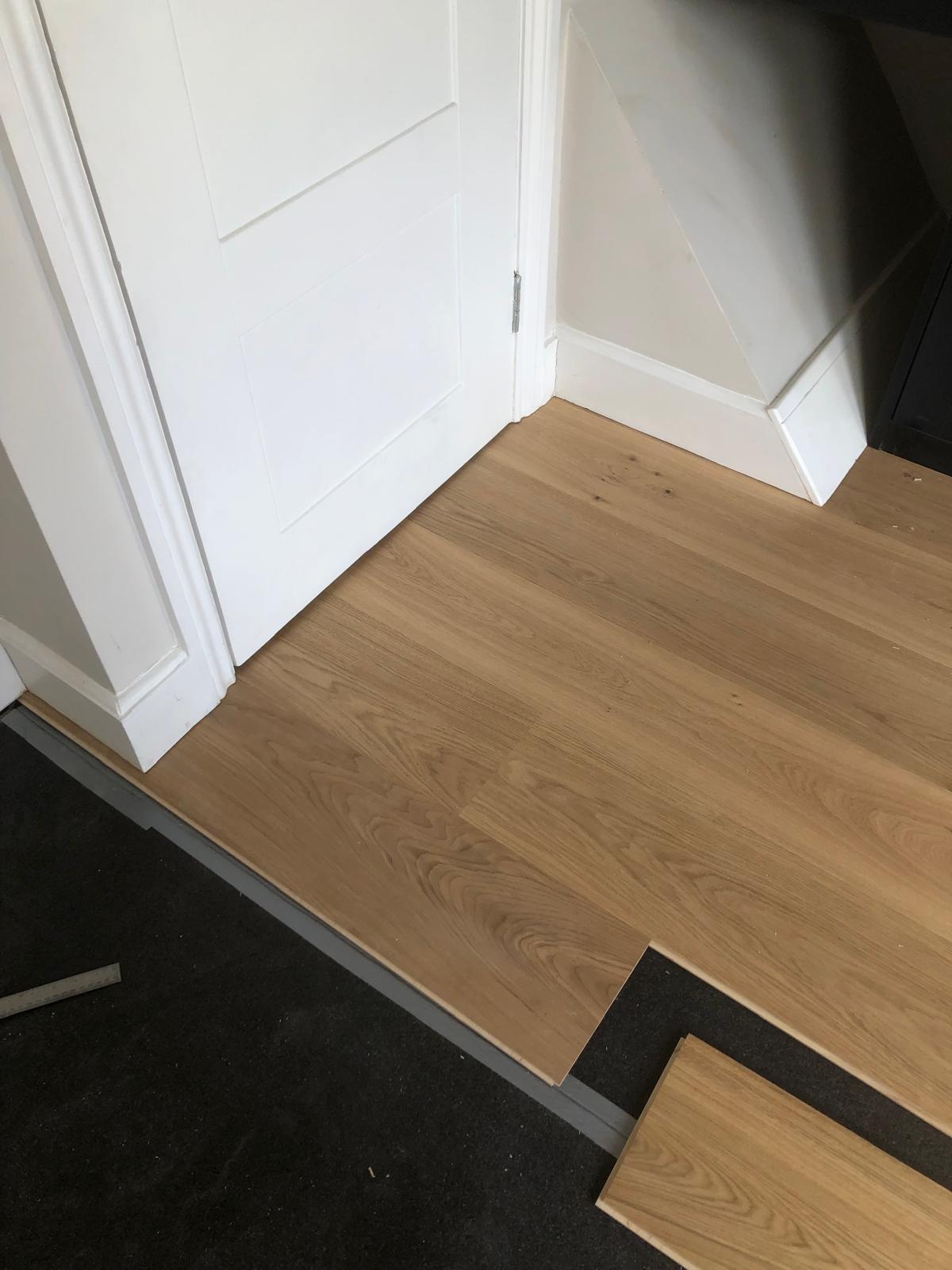
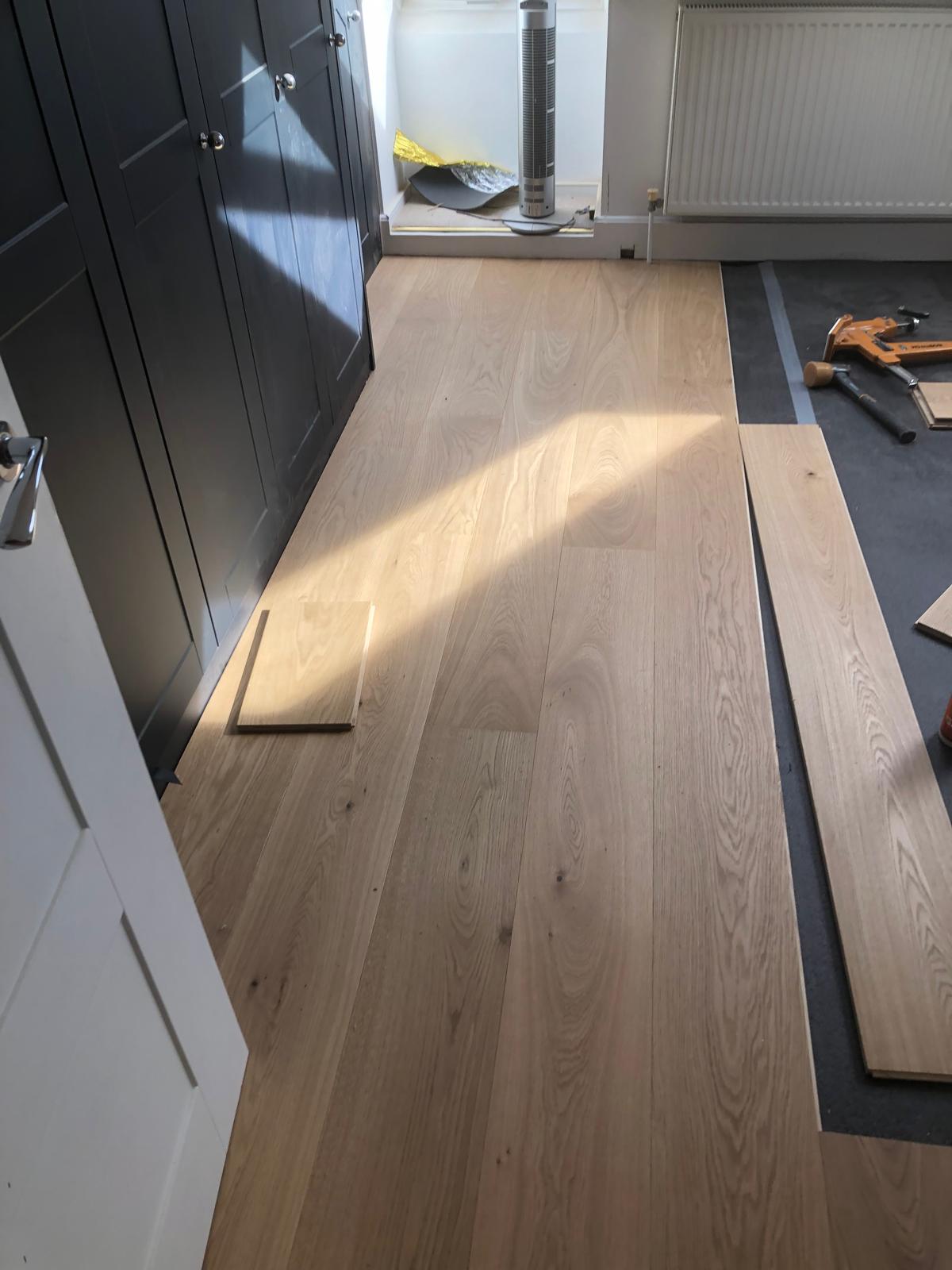
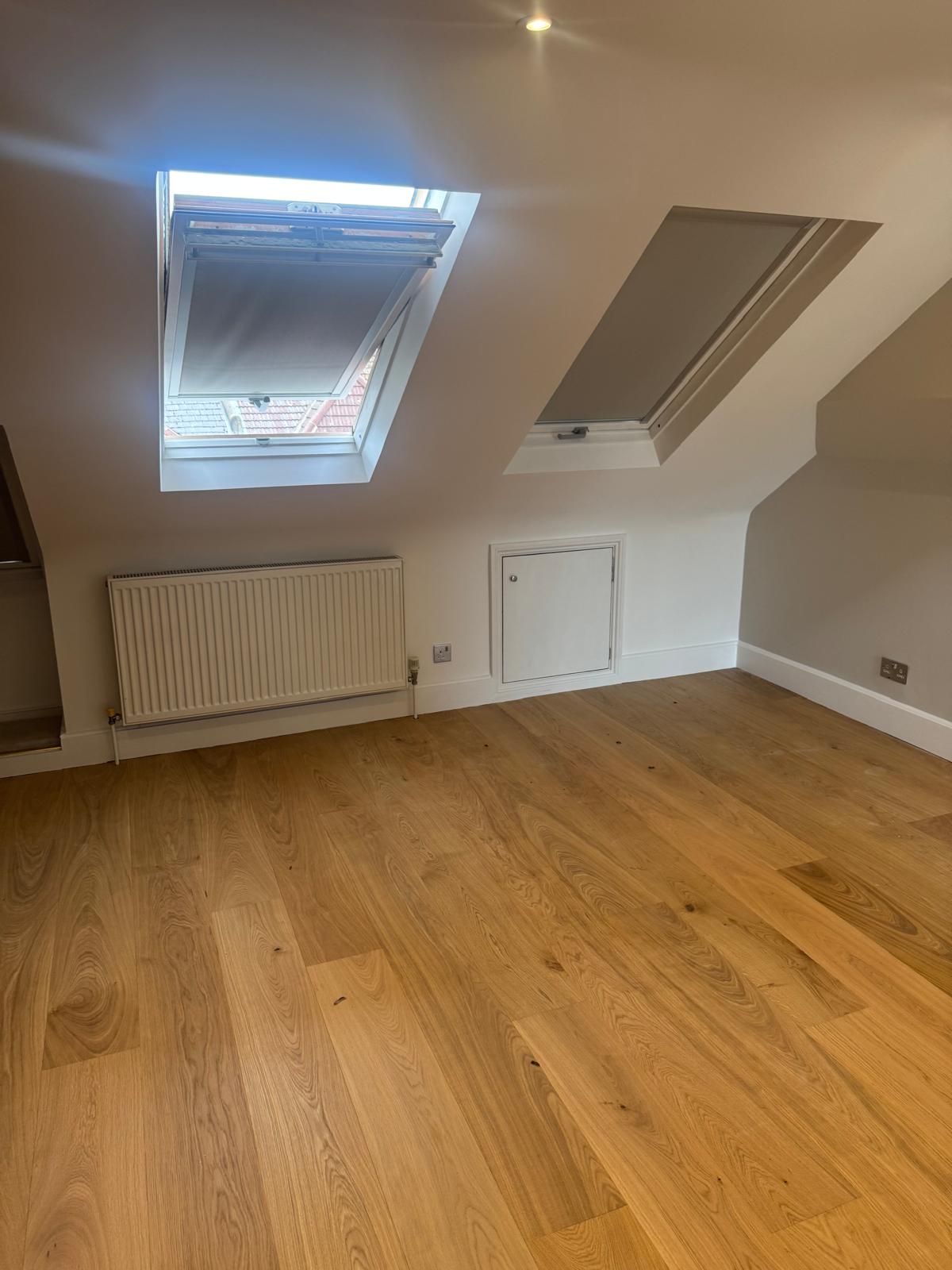
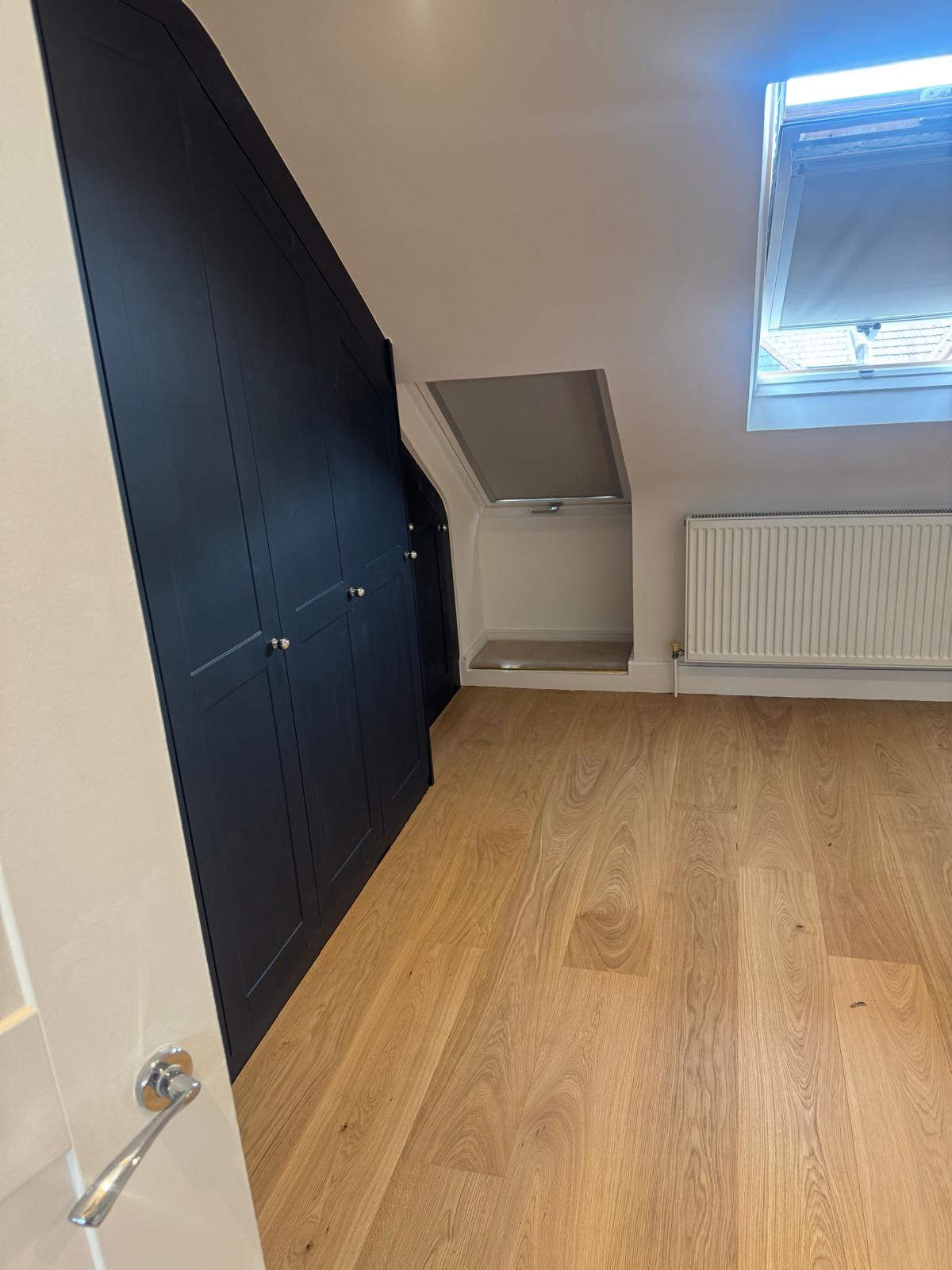
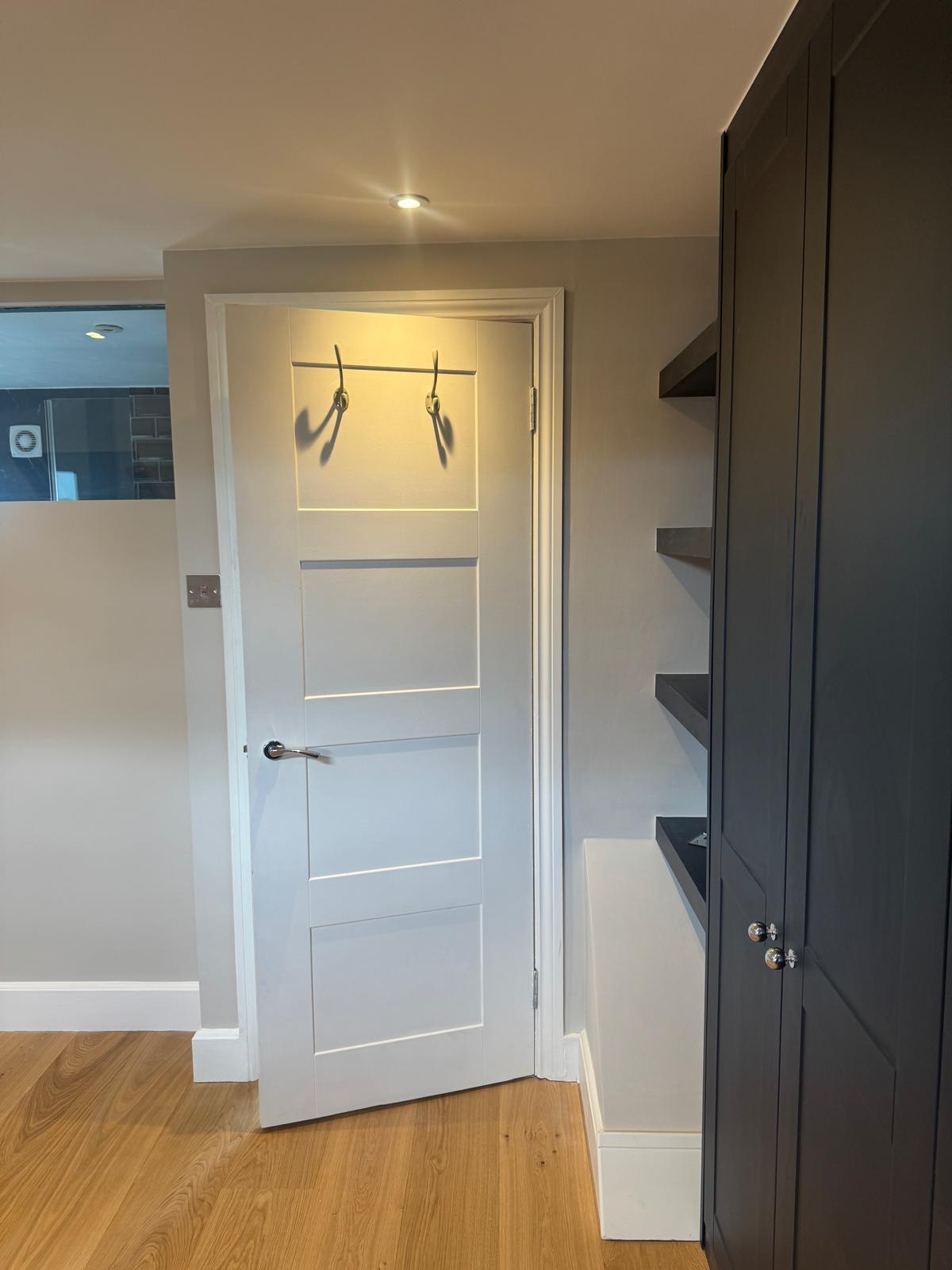
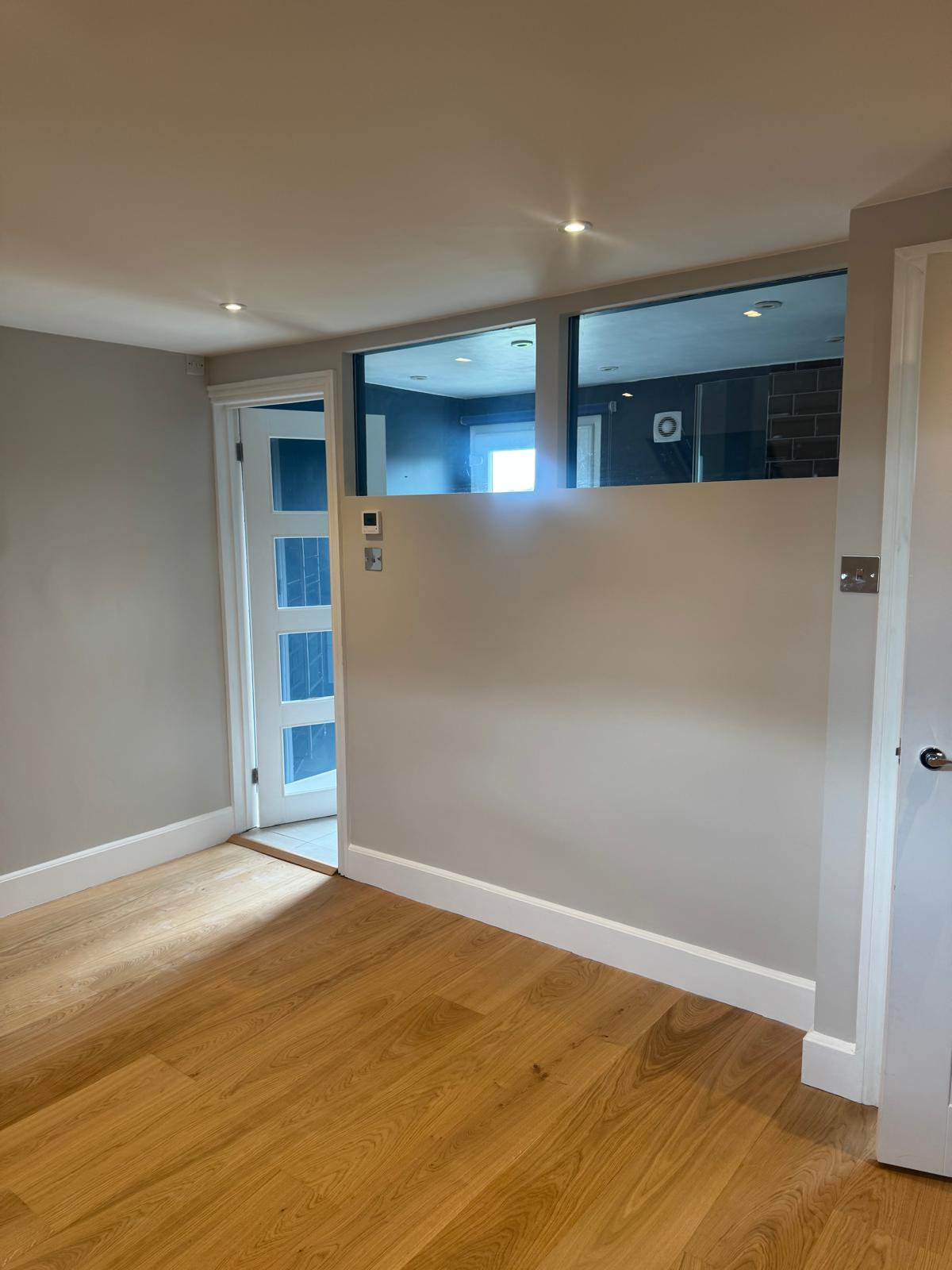
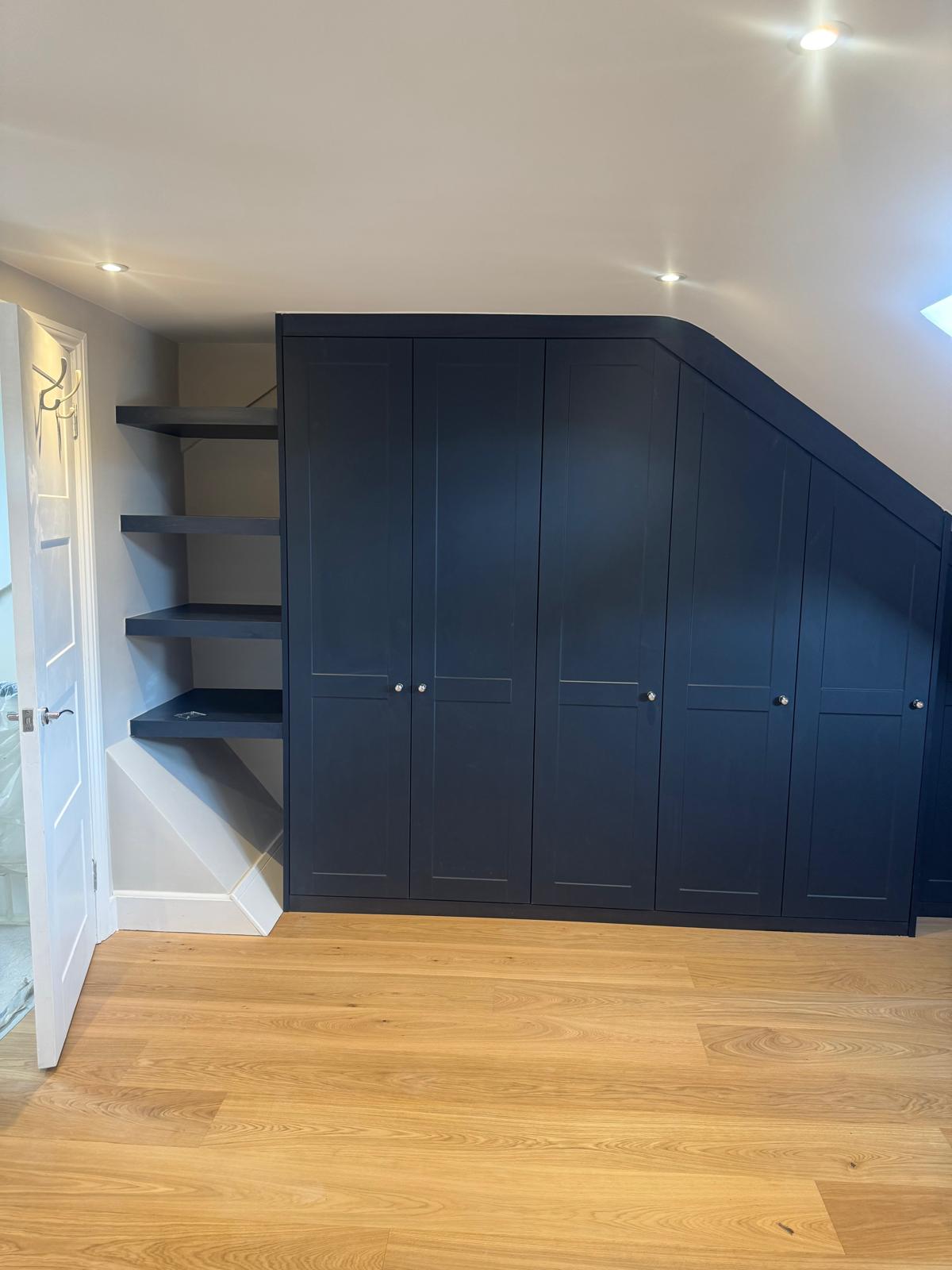
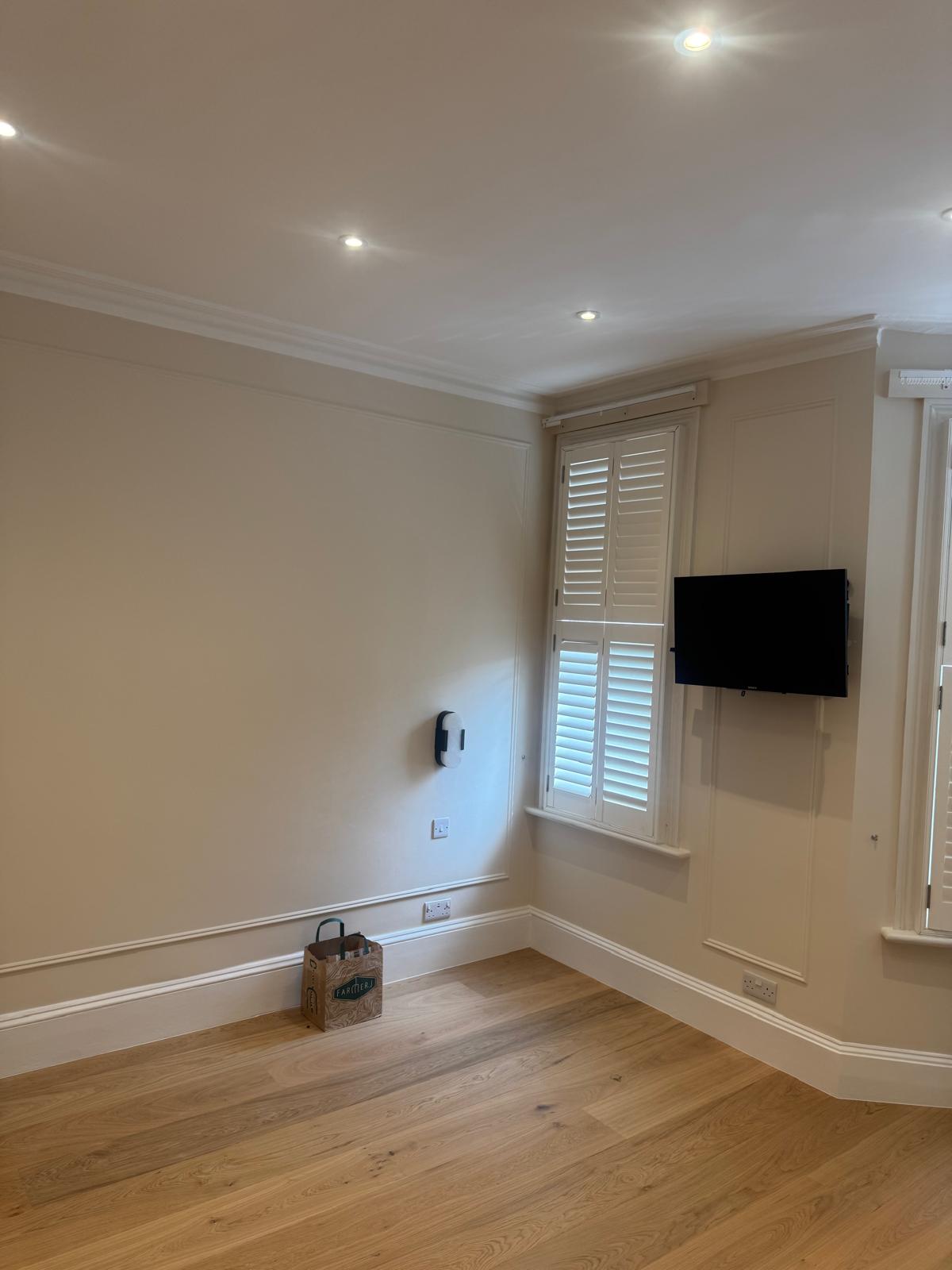
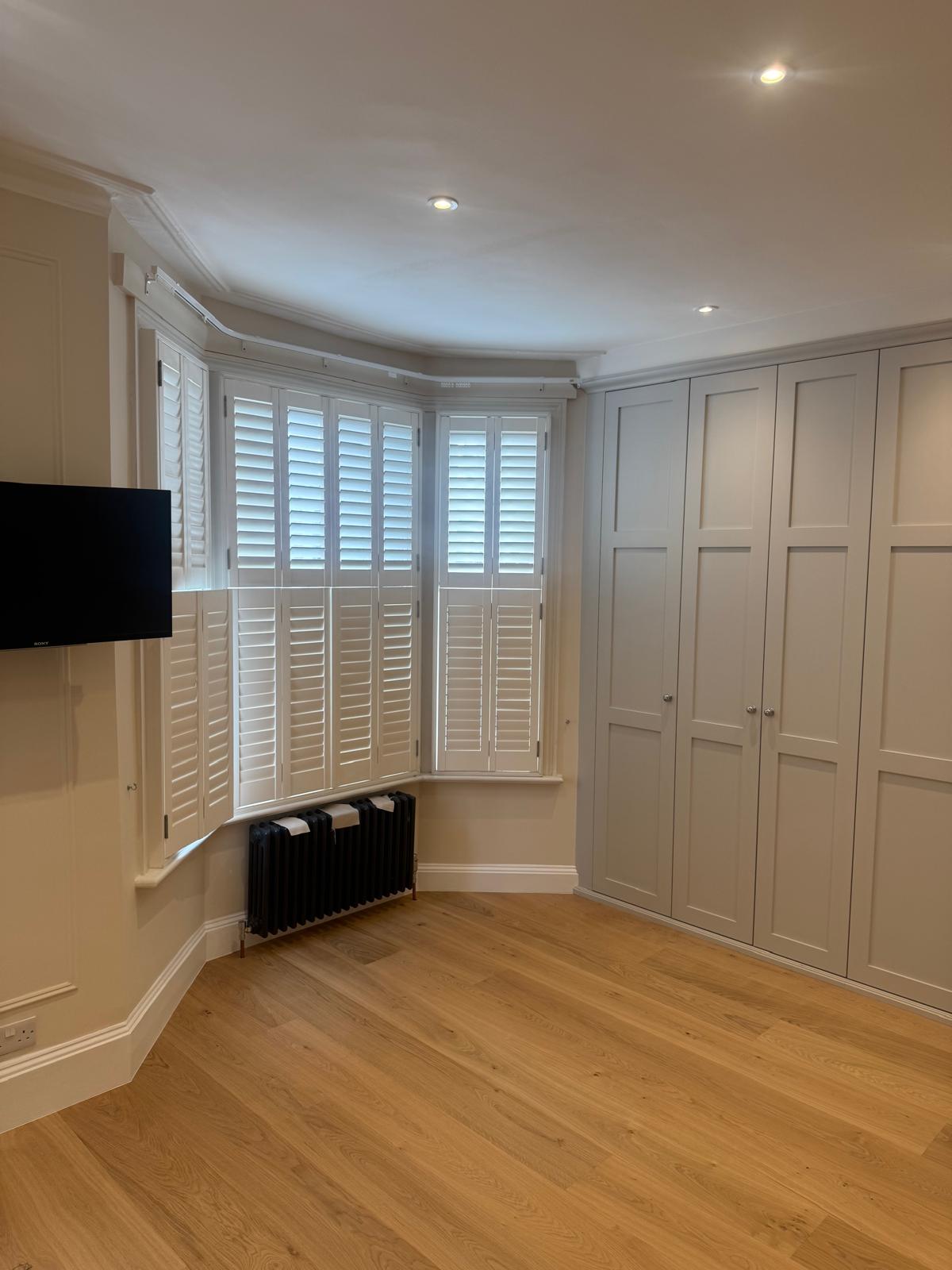
On top of the plywood went a soundproof underlay, and only then the oak. The boards arrived early and sat stacked in the rooms to acclimatise before fitting. Solid oak, wide boards, glued and secured with a flooring nailer, run wall to wall through the bedrooms, the loft room under the Velux windows and out across the landing.
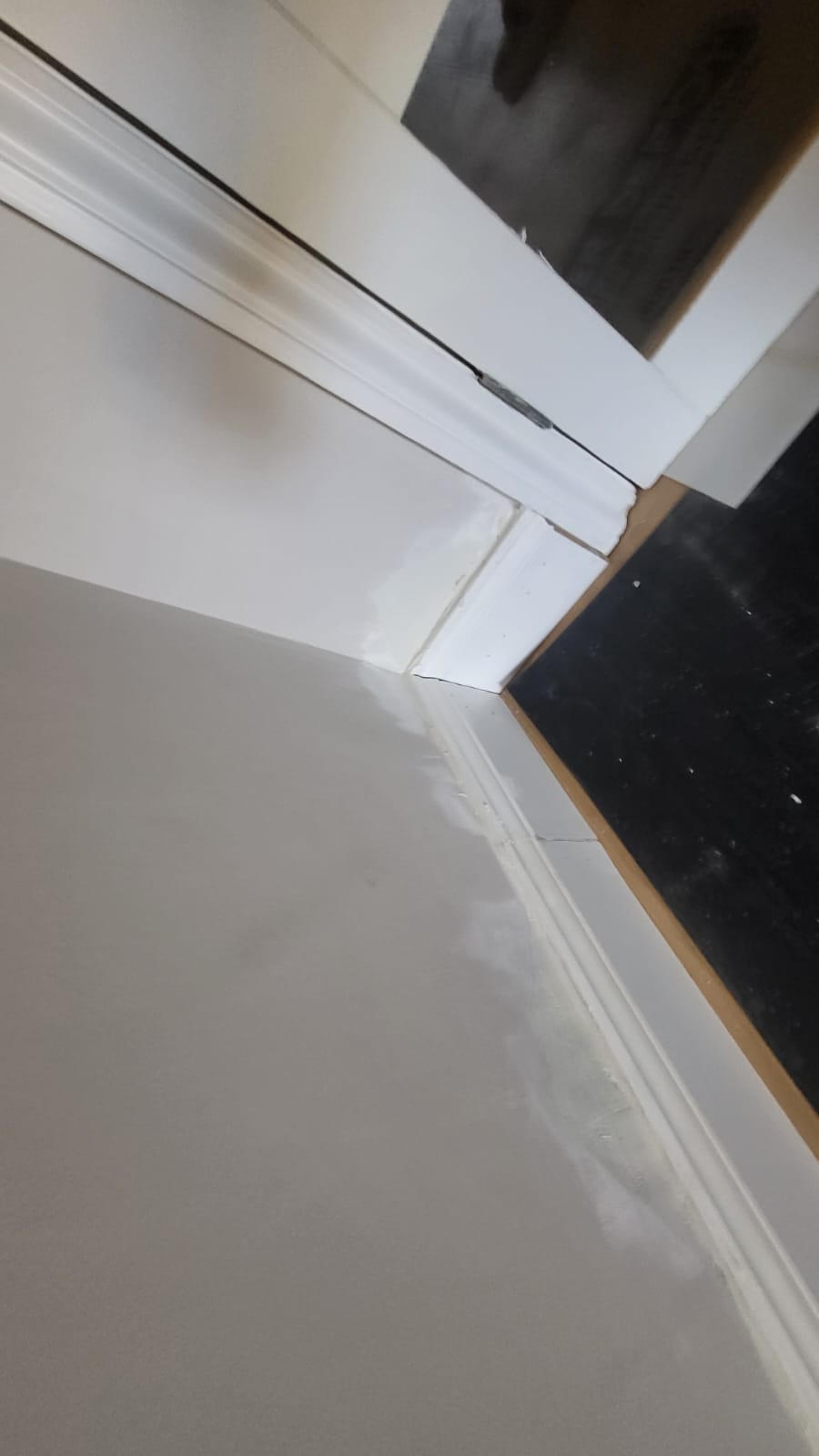
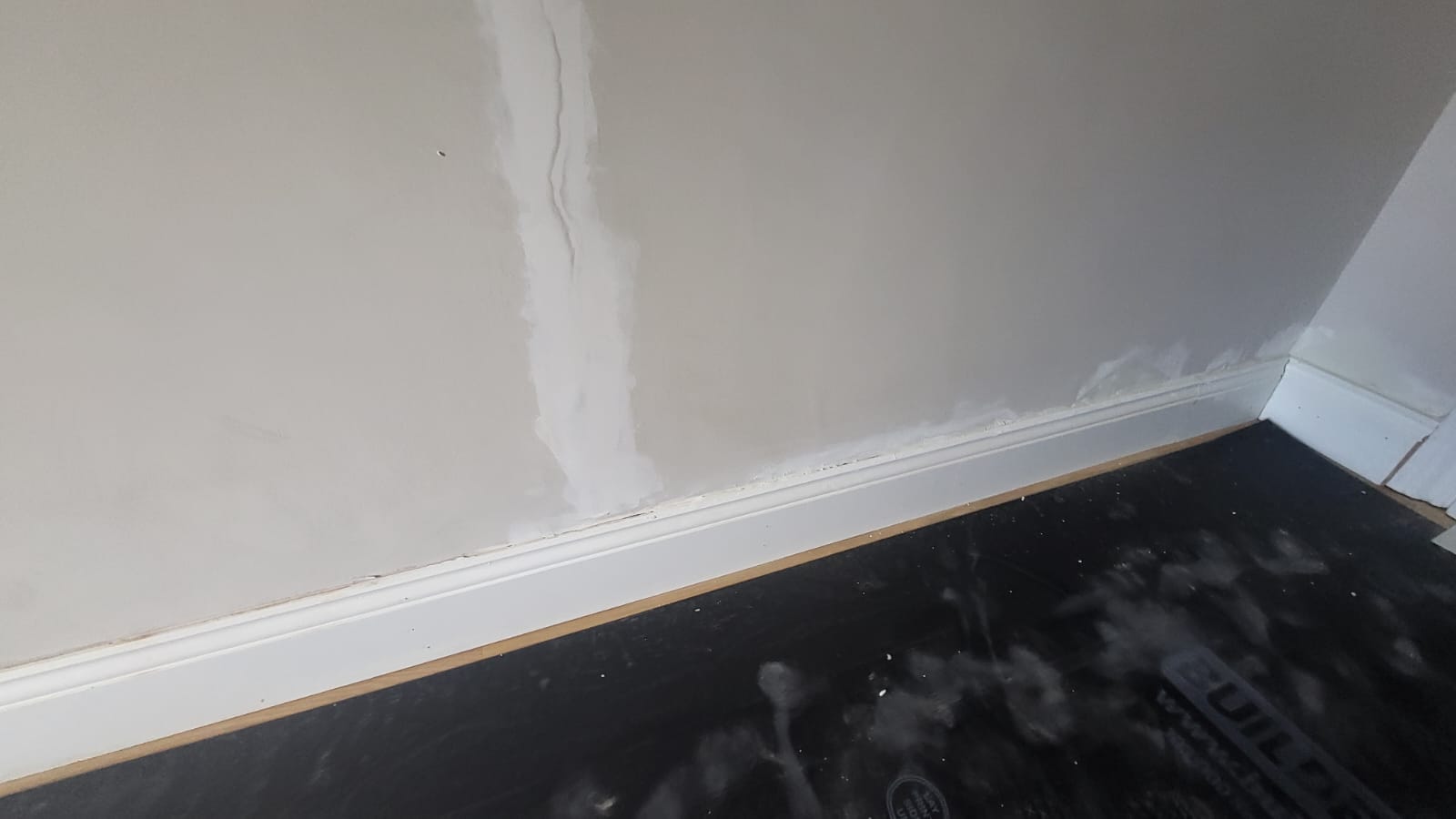
The finish was the skirting: fitted, filled and painted white against the oak. Between the mineral wool, the plywood deck and the underlay, footsteps no longer carry through the ceilings the way they used to.
Most often the original damp proof course has failed or been bridged and ground moisture is rising through solid brick walls. It shows as a tide mark low on the wall, blown paint or plaster, black mould and a musty smell. Damp can also come from a leaking pipe or from external ground levels sitting higher than the internal floor, so it is worth establishing which one you have before spending money on a fix.
A line of holes is drilled into a mortar bed near the base of the wall and damp proof cream is injected into them. The cream spreads into the mortar and brick and cures into a water repellent band running through the thickness of the wall, which stops moisture travelling up past that line. It forms a new damp proof course inside the existing wall, so nothing has to be taken down.
Rising damp carries ground salts into the wall face and leaves them there. Those salts attract moisture from the air, so a contaminated finish stays damp even after the rising damp itself has been stopped. Leaving it on is the most common reason a damp job comes back. On this project the old finish was taken off back to bare brick across the affected zone before rendering.
The additive — Sika waterproof liquid on this job — goes into the mixing water, so resistance to moisture runs through the whole coat instead of sitting on the surface. Ordinary gypsum plaster applied straight onto a wall with a damp history will draw moisture and break down. Render is also a more sensible base in a cellar that has to take knocks from appliances and storage.
Often, yes. The black and white chequerboard floor in this cellar was dirty but flat and sound, so it was protected during the works, cleaned and kept. Floors of this type are hard to match and worth saving wherever the condition allows.
Yes. Putney, Wandsworth, Southfields, Barnes and the surrounding South West London streets are regular working ground for us, and the housing stock there is largely Victorian and Edwardian with exactly this kind of cellar. This project on Fawe Park Road, SW15 was carried out by our own team, from stripping the utility room out to putting it back. Call Force Builders Ltd on 020 8578 6285 to talk yours through.
Looking for a reliable local team in London? Force Builders is here — ready to take on your next project with quality, care, and experience you can trust.
Two decades of projects across London — from small renovations to full-scale builds. We know what works, what lasts, and how to get it right the first time.
Every project is handled by skilled, qualified tradespeople who take pride in their craft. No shortcuts, no guesswork — just reliable workmanship.
We plan carefully, work efficiently, and keep you updated every step of the way. Deadlines matter — and we make sure to meet them.
Questions, updates, or emergencies — we’re always just a call away. Because great service doesn’t end when the tools are packed away.
Damp problem in a basement in Putney or South West London?
Talk it through with Force Builders Ltd — straight answers, no obligation. Over 25 years building across London.

Cookies on this site
We'd like to use Google Analytics cookies to see which pages are useful. They don't identify you, and we don't use advertising cookies. Cookie Policy